‹
Night Records

Ep. 1 · The Golden State Killer

한국어
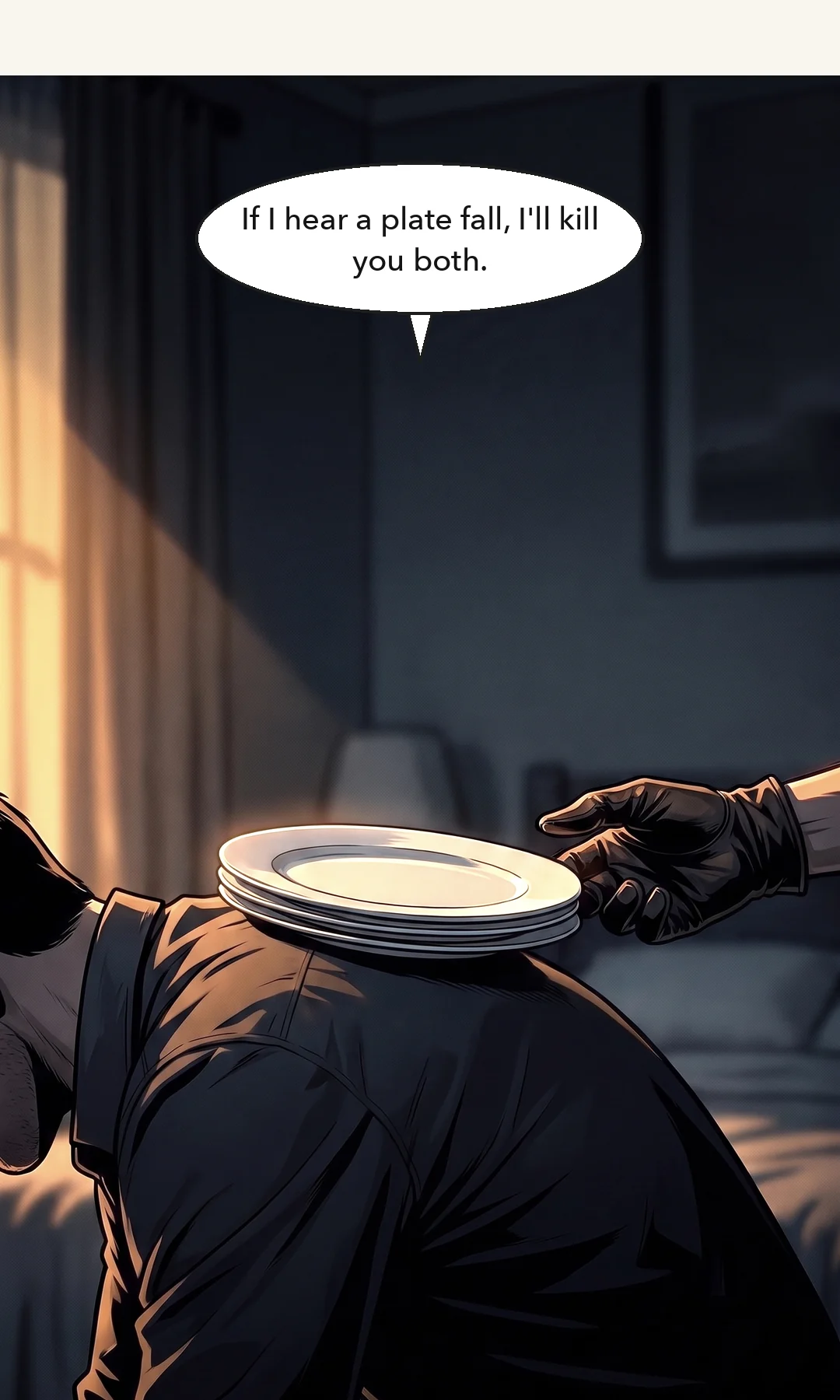
Plates stack up — two, then three. — "If you hear a plate fall, I kill you both."
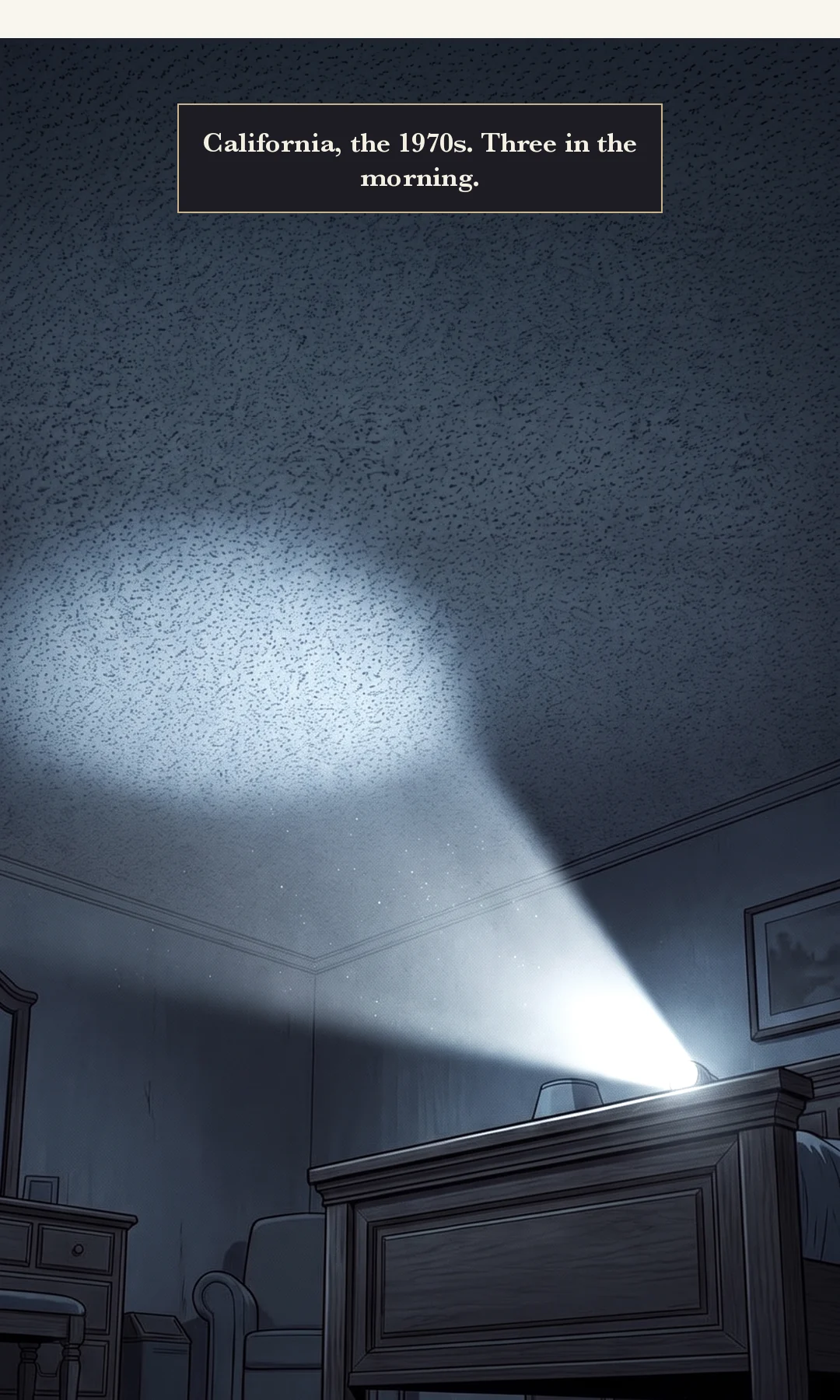
A flashlight sweeps a dark bedroom ceiling. — California, the 1970s. Three in the morning.
On the bed, a plate is set on a man's back. His face is out of frame. / Before dawn, footsteps fade away past an open window. — He tied the couple up and stacked plates on the husband's back.
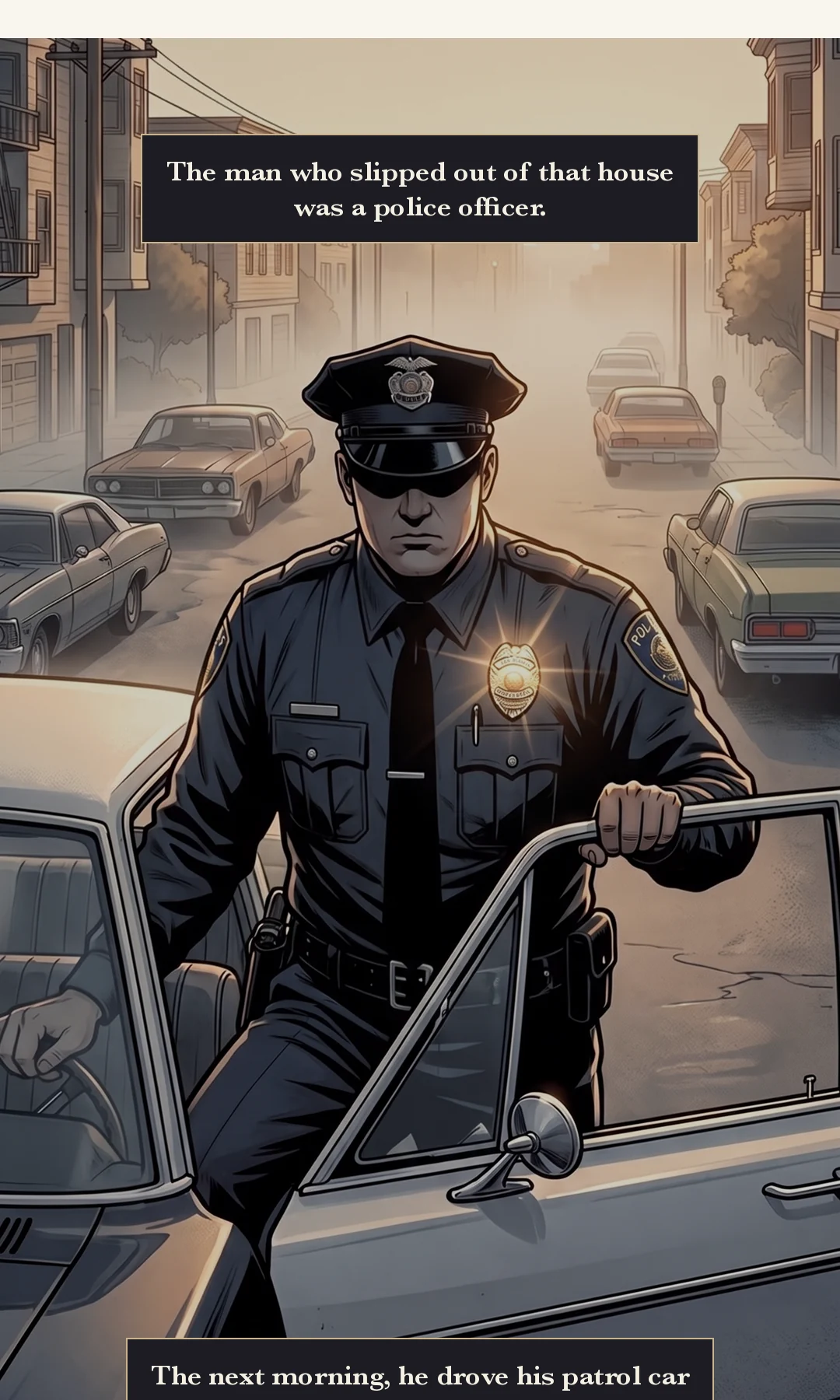
Morning light. A man in uniform gets into a patrol car. (reenactment · his face in the shadow of the cap brim) — The man who slipped out of that house was a police officer. The next morning he drove his patrol car through the same neighborhood.
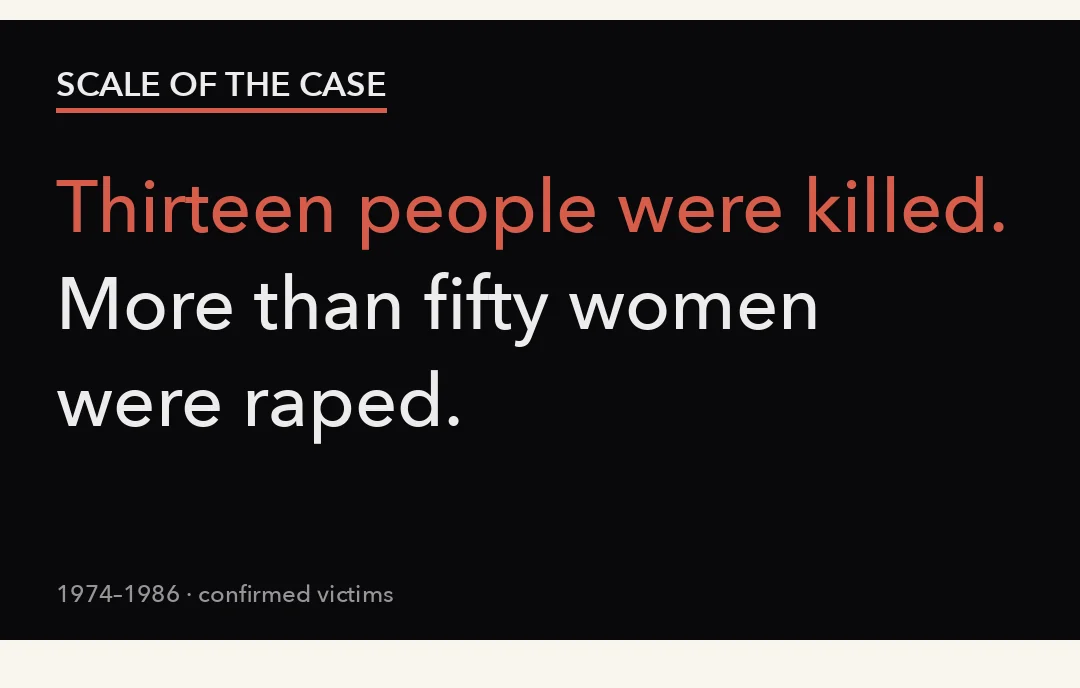
[card] Thirteen killed · more than fifty raped · forty years.
A long shot of a residential street at night. — That house was not the only one he visited.
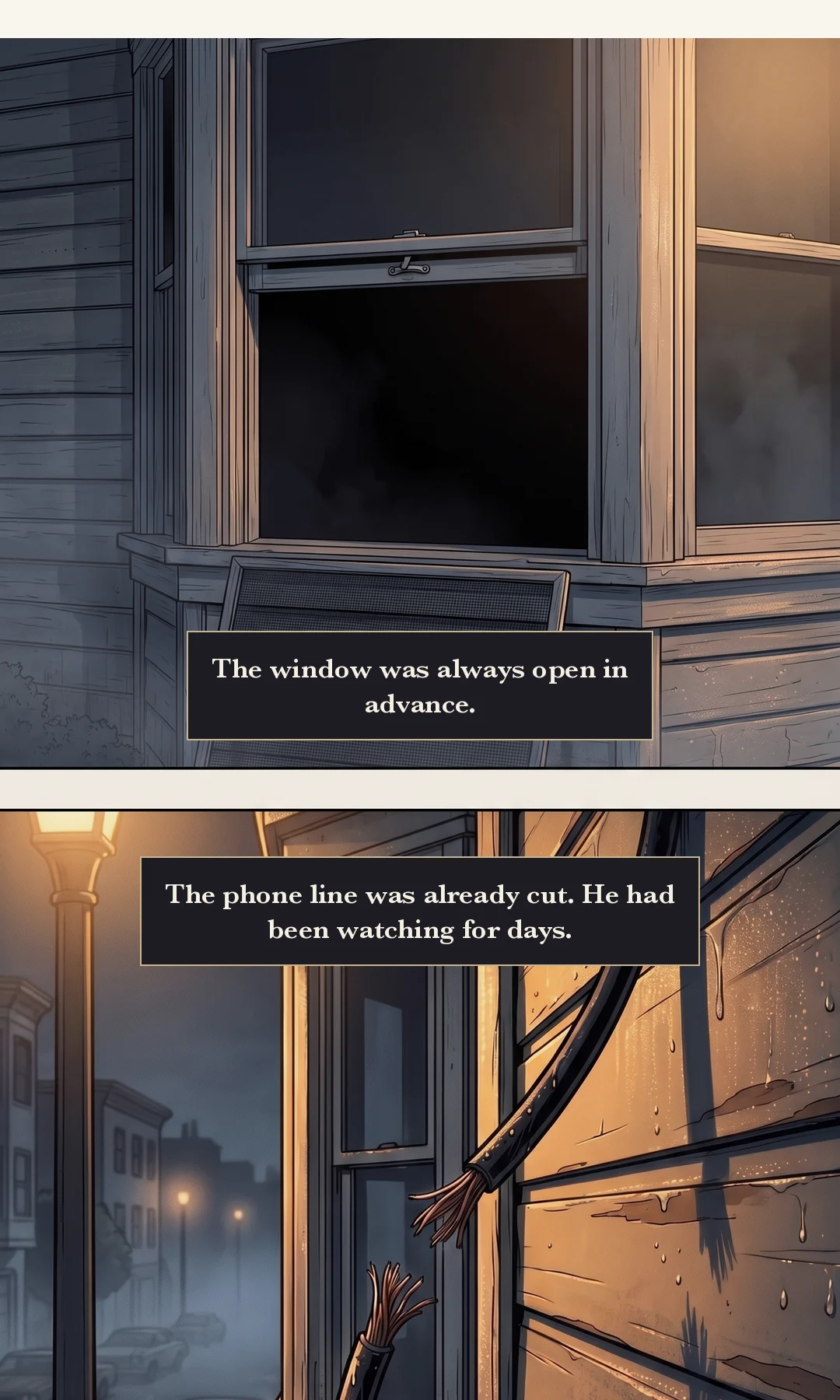
A window already unlatched. / A cut telephone line. — The window was always open in advance. The phone line was already cut. It meant he had been watching for days.
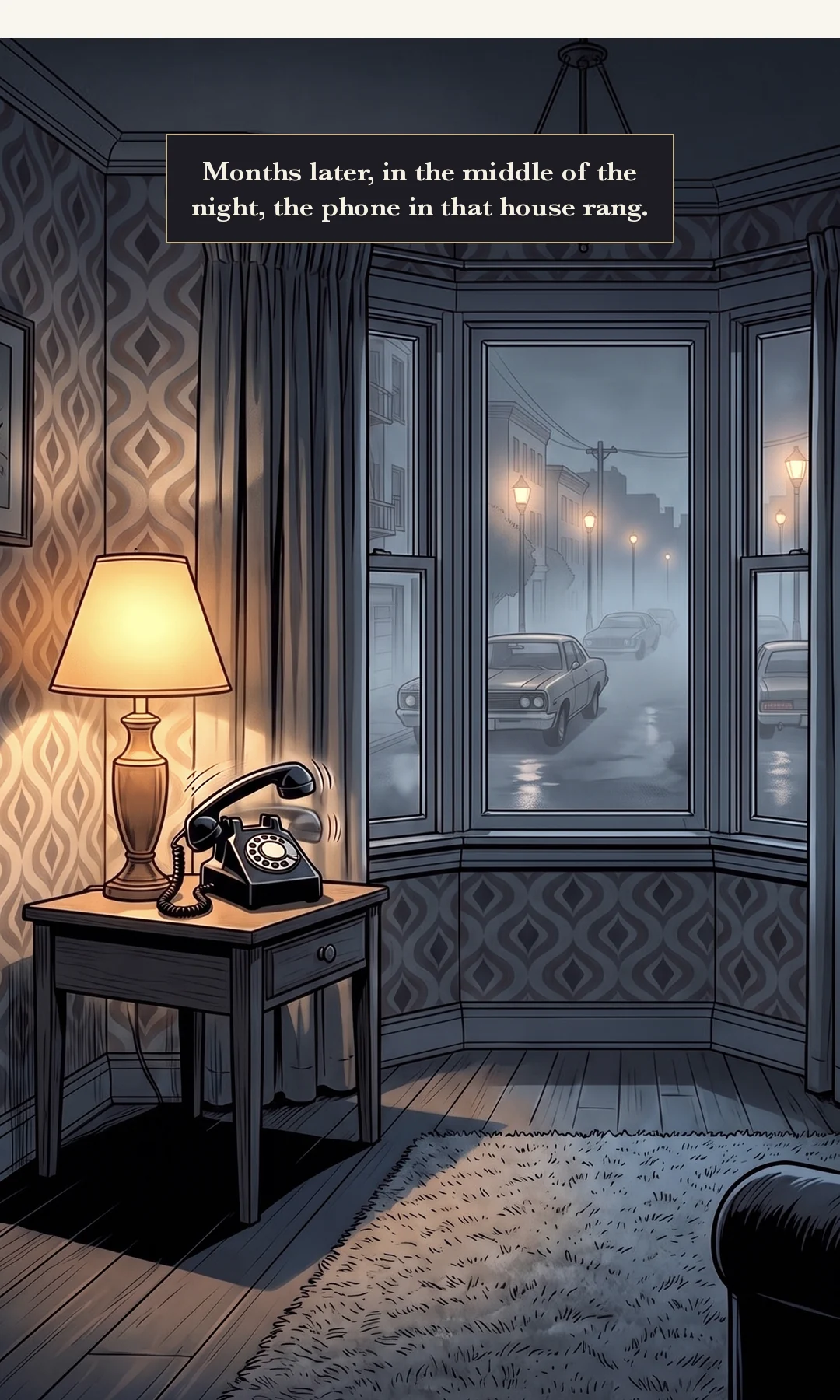
A living room in the middle of the night. The telephone rings. — Months later, in the middle of the night, the phone in that house rang.
A woman's hand and the side of her face as she lifts the receiver. (reenactment) — It was a voice saying he had not forgotten, and that he would come back.
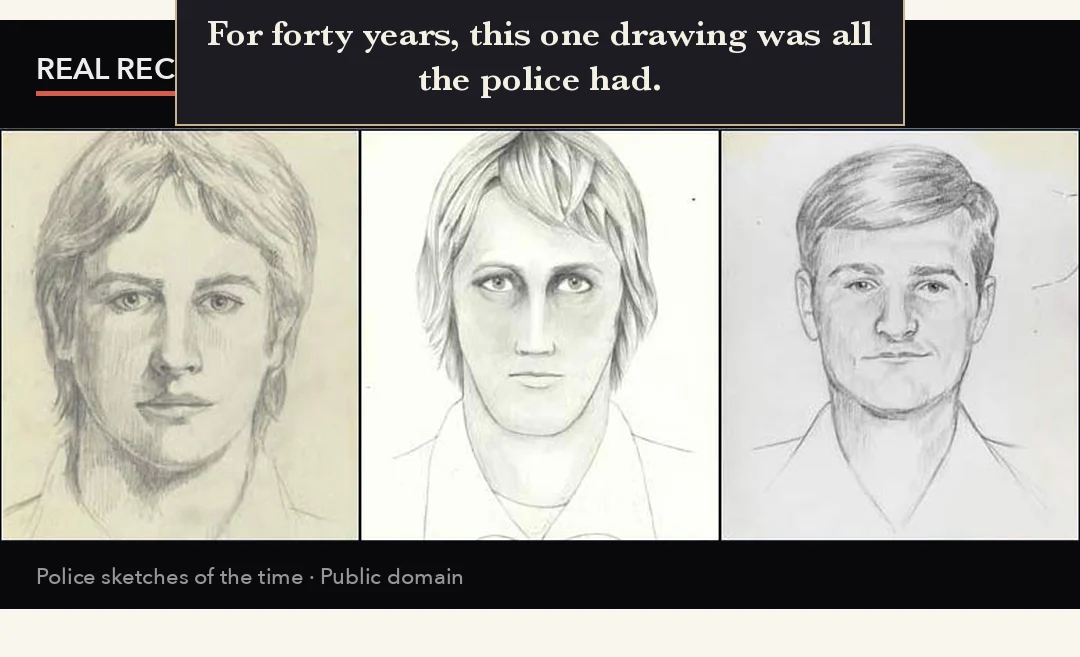
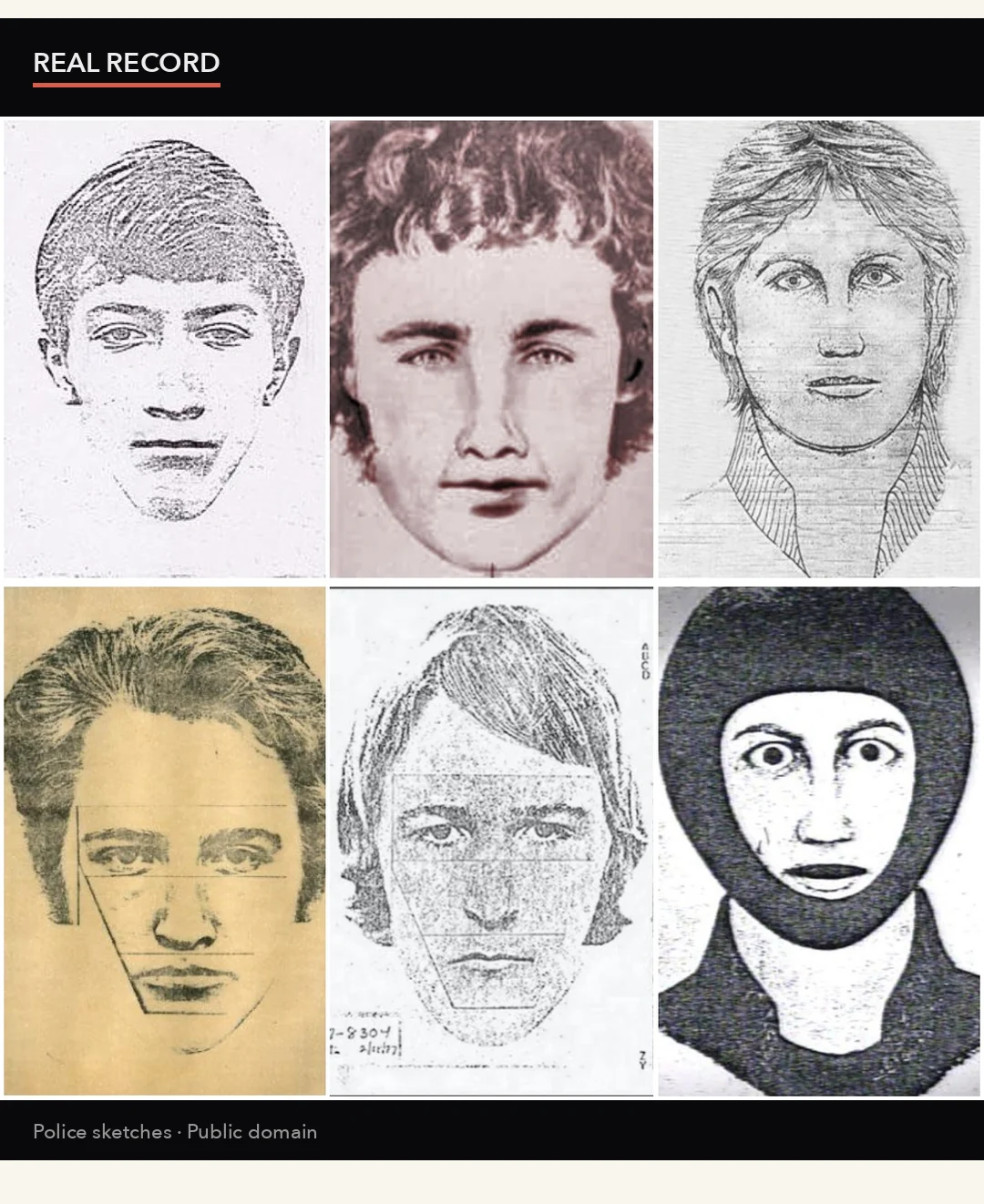
[archive] The police sketch from the time. — For forty years, all the police had was this one drawing.
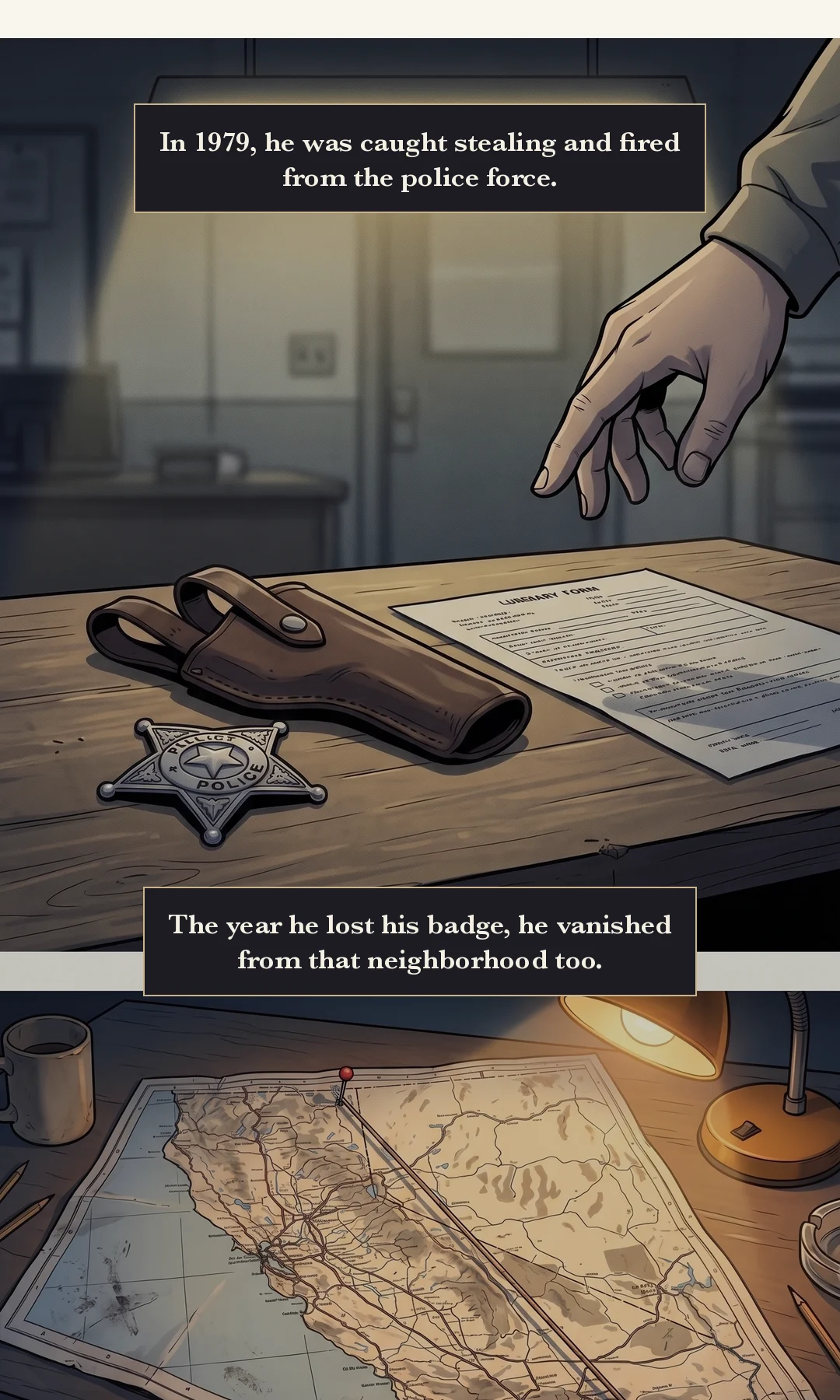
A badge and a holster laid on a desk. / A drawer closing over a surrendered badge. — In 1979 he was caught stealing and fired from the force. The year he lost the badge, he disappeared from that neighborhood too.
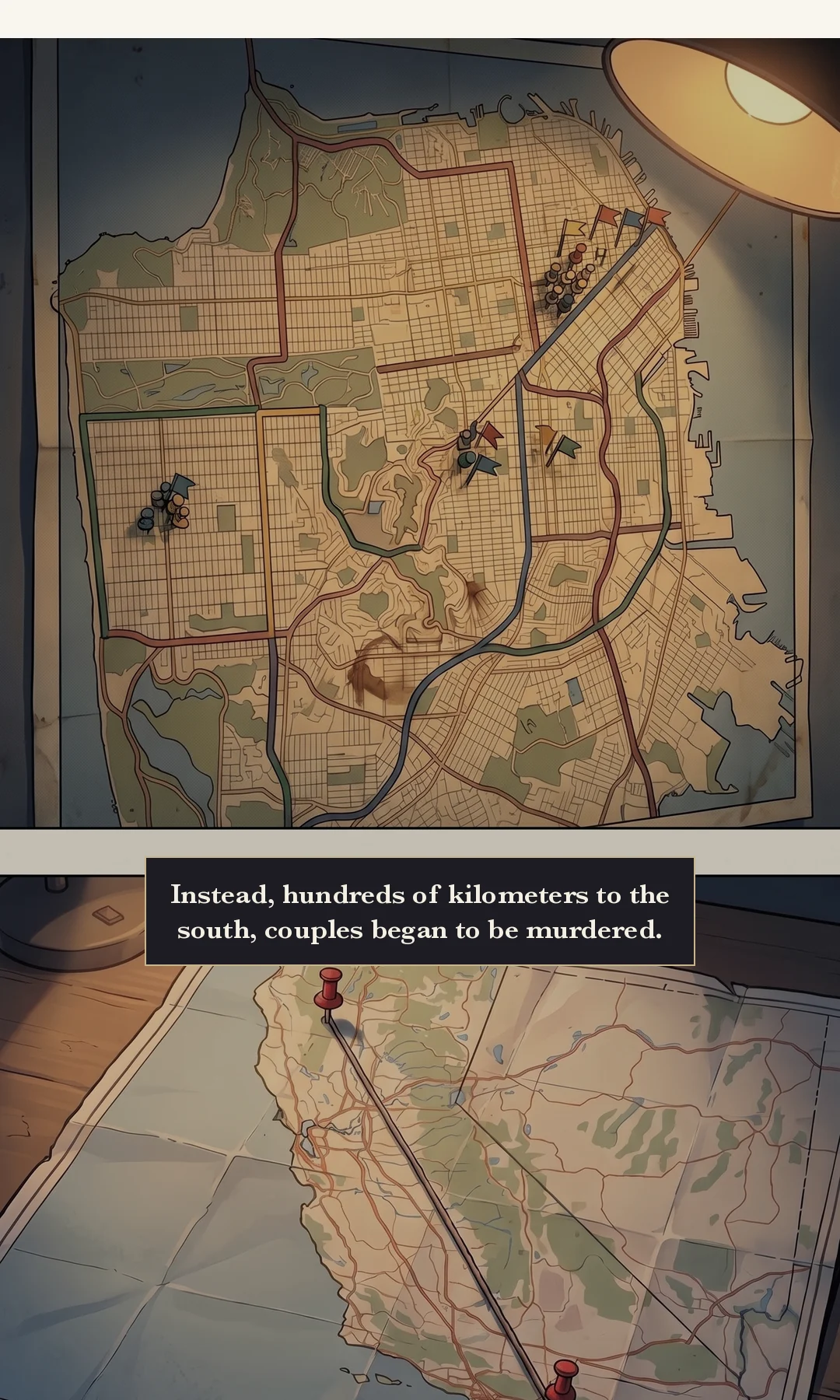
A map with jurisdiction lines drawn on it. / Two dots on a map of California. — Instead, couples began to be murdered to the south, as far away as Busan is from Seoul. No one knew it was the same man.
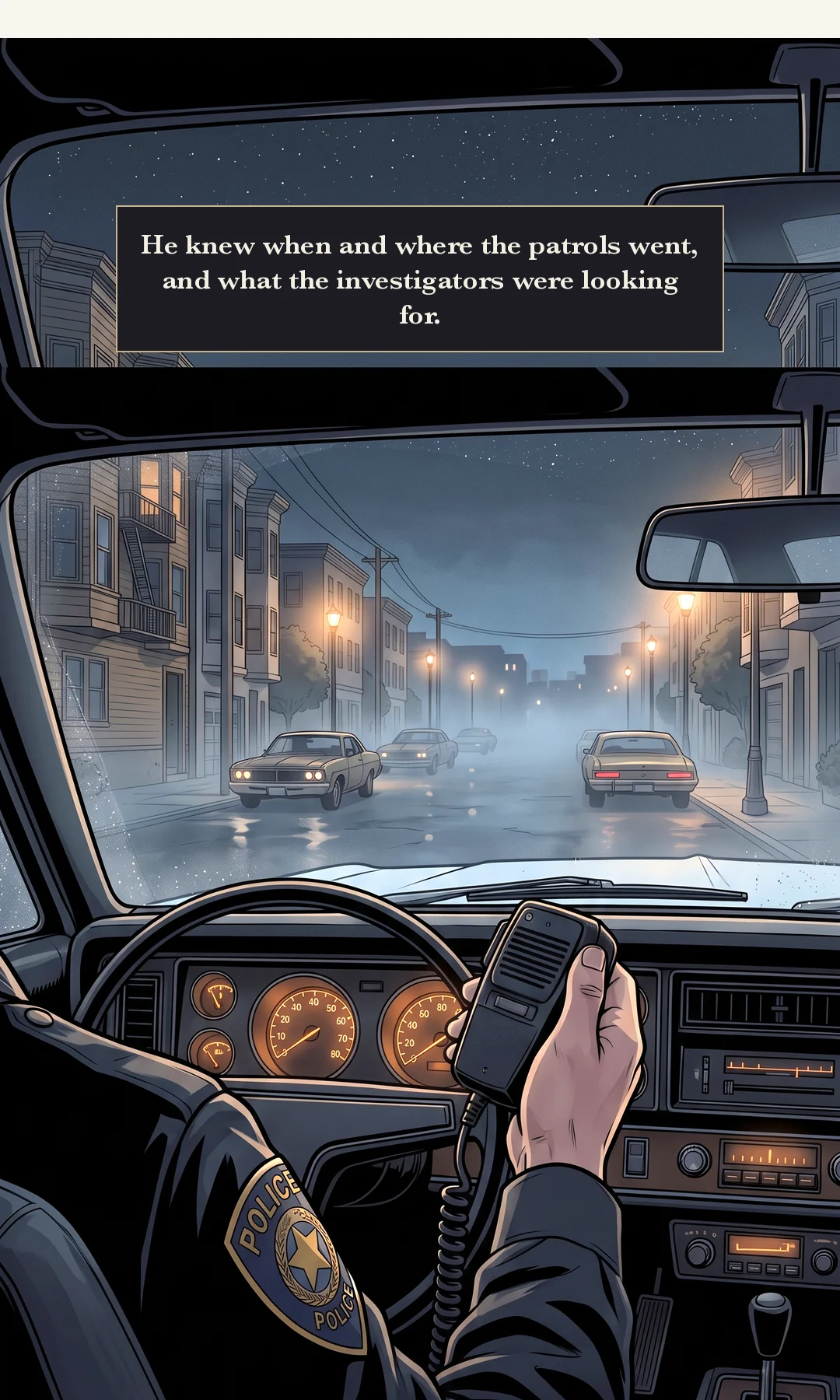
A patrol car radio and a hand on the wheel. — He knew when and where the patrols went, and what the investigators were looking for.
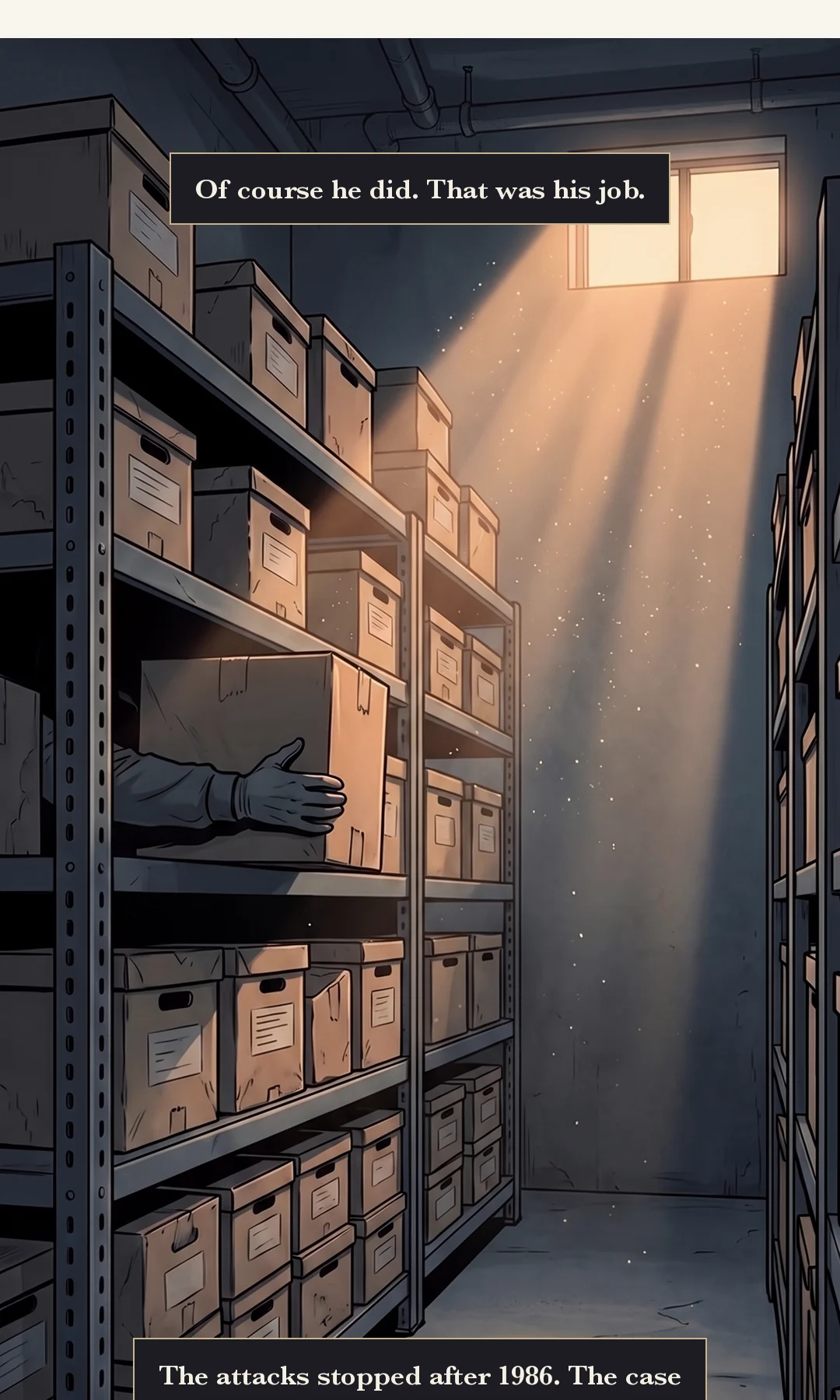
Case boxes piling up in a storeroom. — Of course he did. That was his job. The attacks stopped after 1986. The investigation went straight into storage.
A manuscript and stacks of research on a desk. (a writer) — In the meantime, a writer tied the scattered cases together and gave them a name.
[card] The Golden State Killer.
Hands opening the file boxes for the first time, 1994. / Evidence vials in frozen storage. — Investigator Paul Holes first pulled these files in 1994. Twenty-four years followed. The forty-year-old DNA existed, but he was not in any offender database.
An ordinary person spits into a tube. — So they decided to go the other way. Instead of looking for the man, they would look for his relatives.
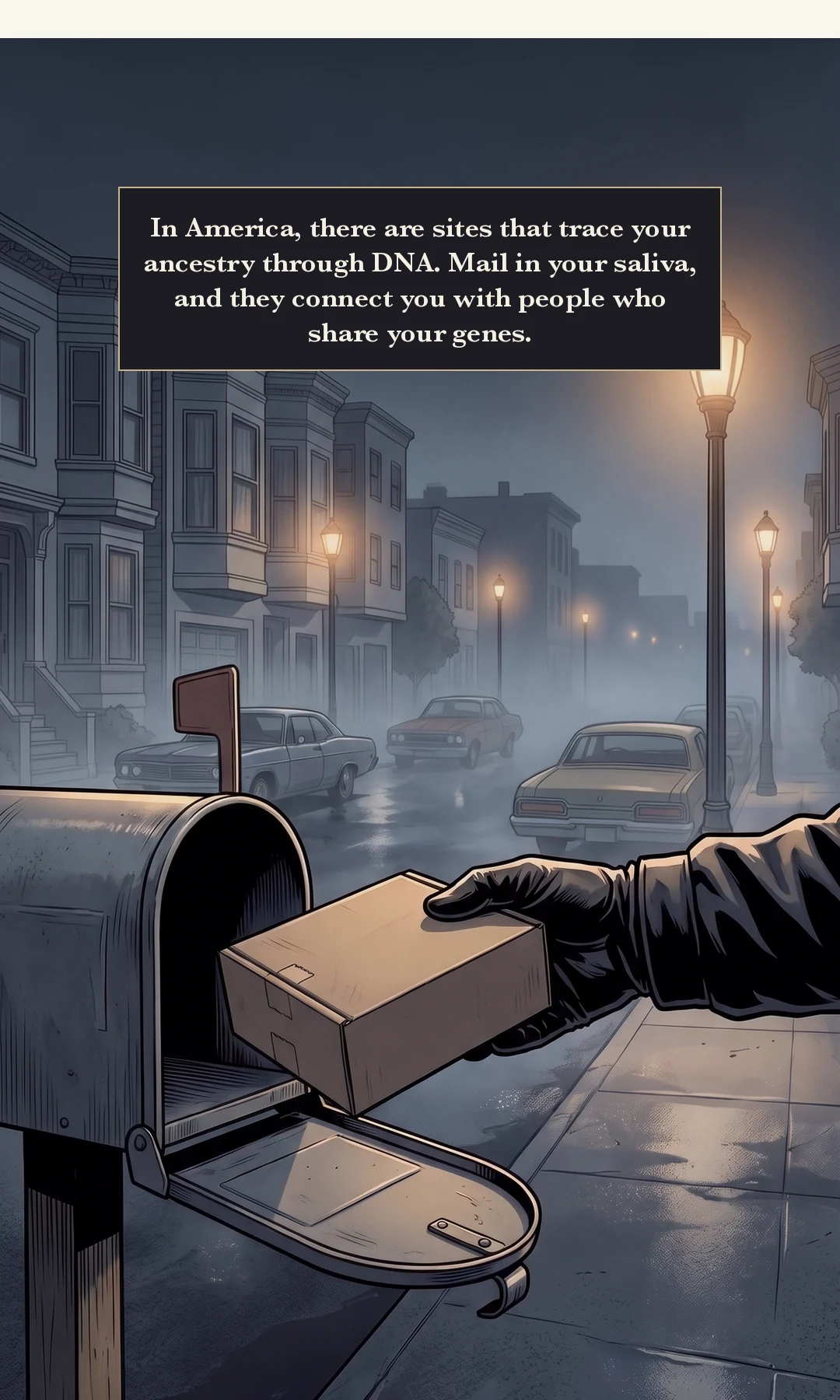
A test kit box going into a mailbox. — In the United States there are sites that trace your ancestry from your DNA. You mail in your saliva and they connect you to people who share your genes.
[card] Fewer than a million people were in it at the time / Korea has no such site. If it did—
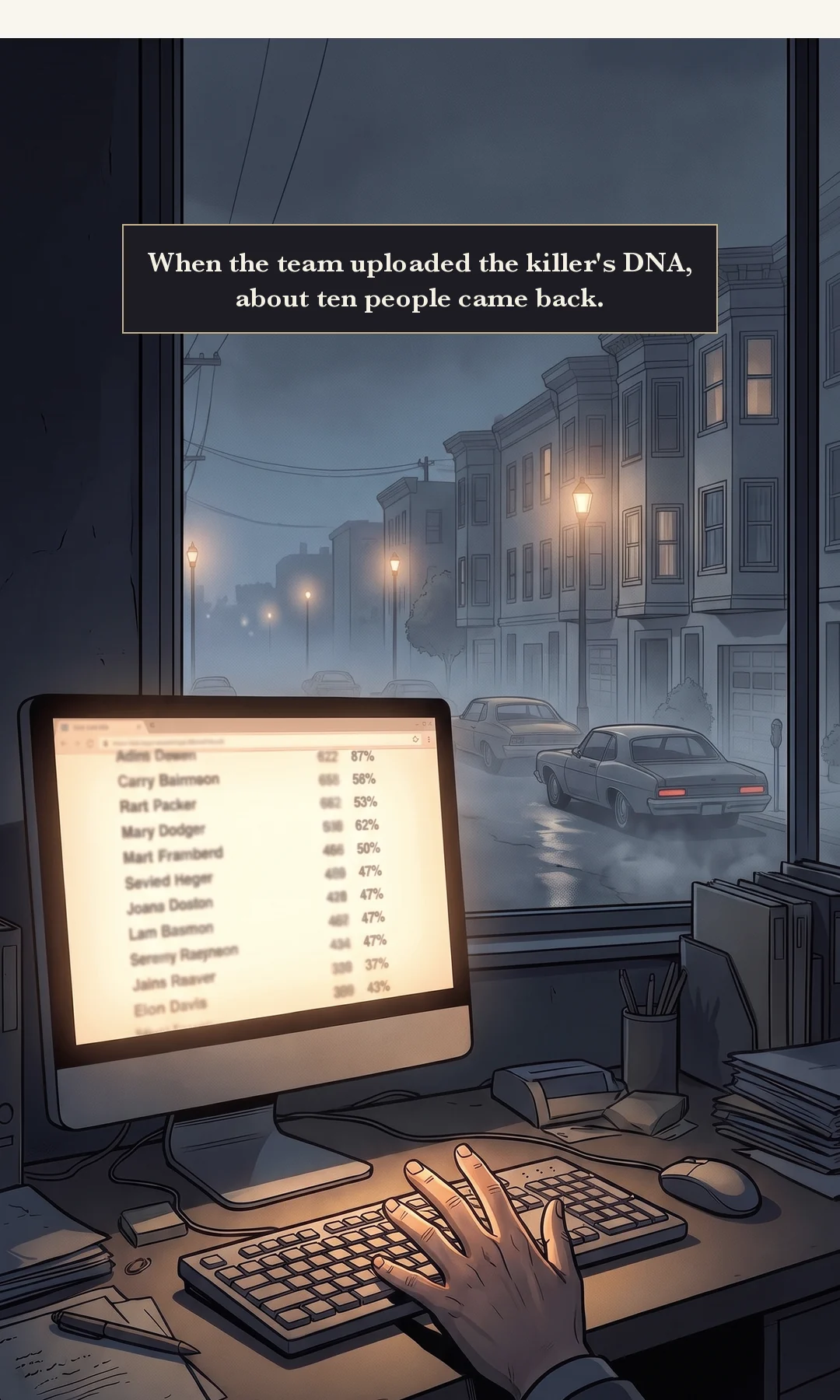
A list of matches on a monitor. — When the team uploaded the killer's DNA, about ten people came back.
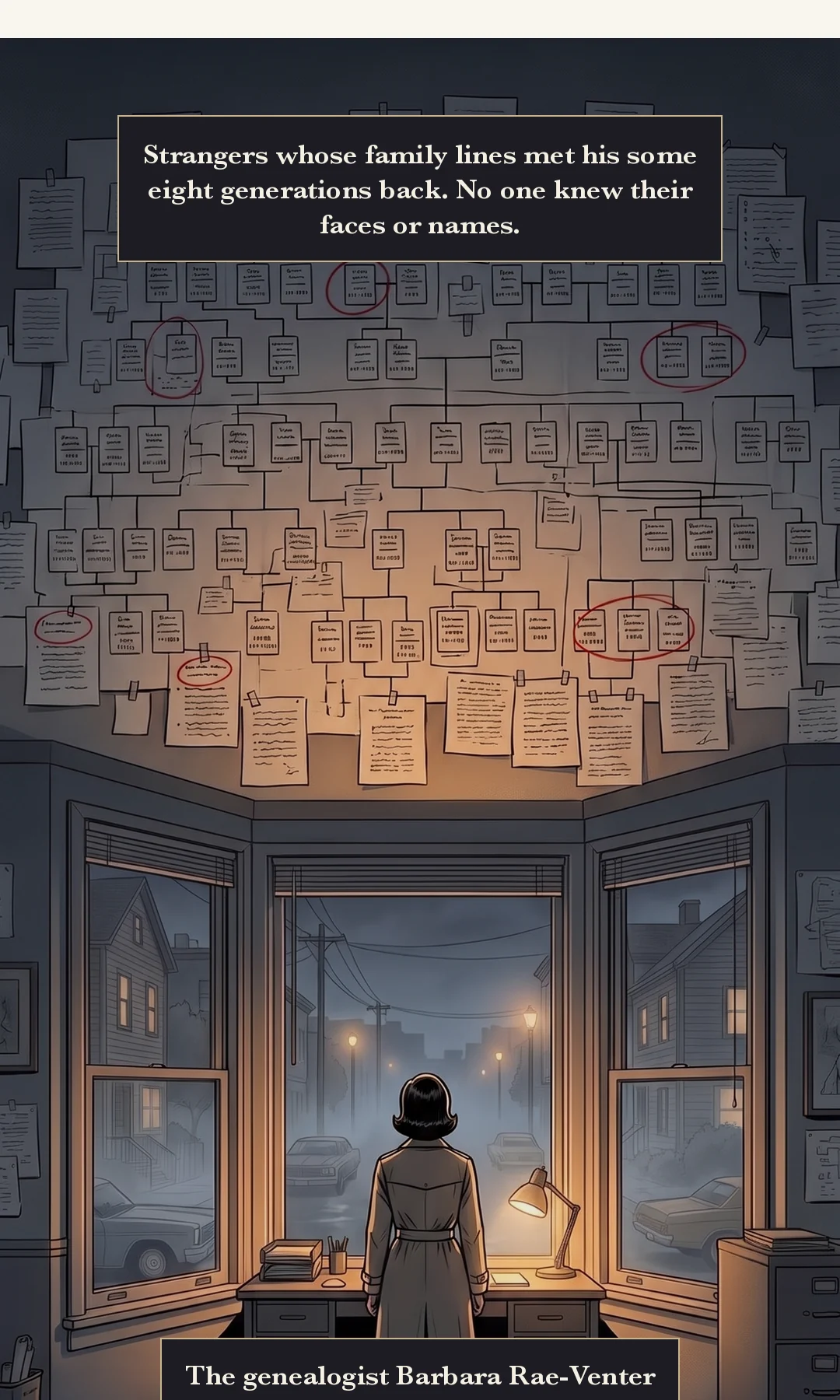
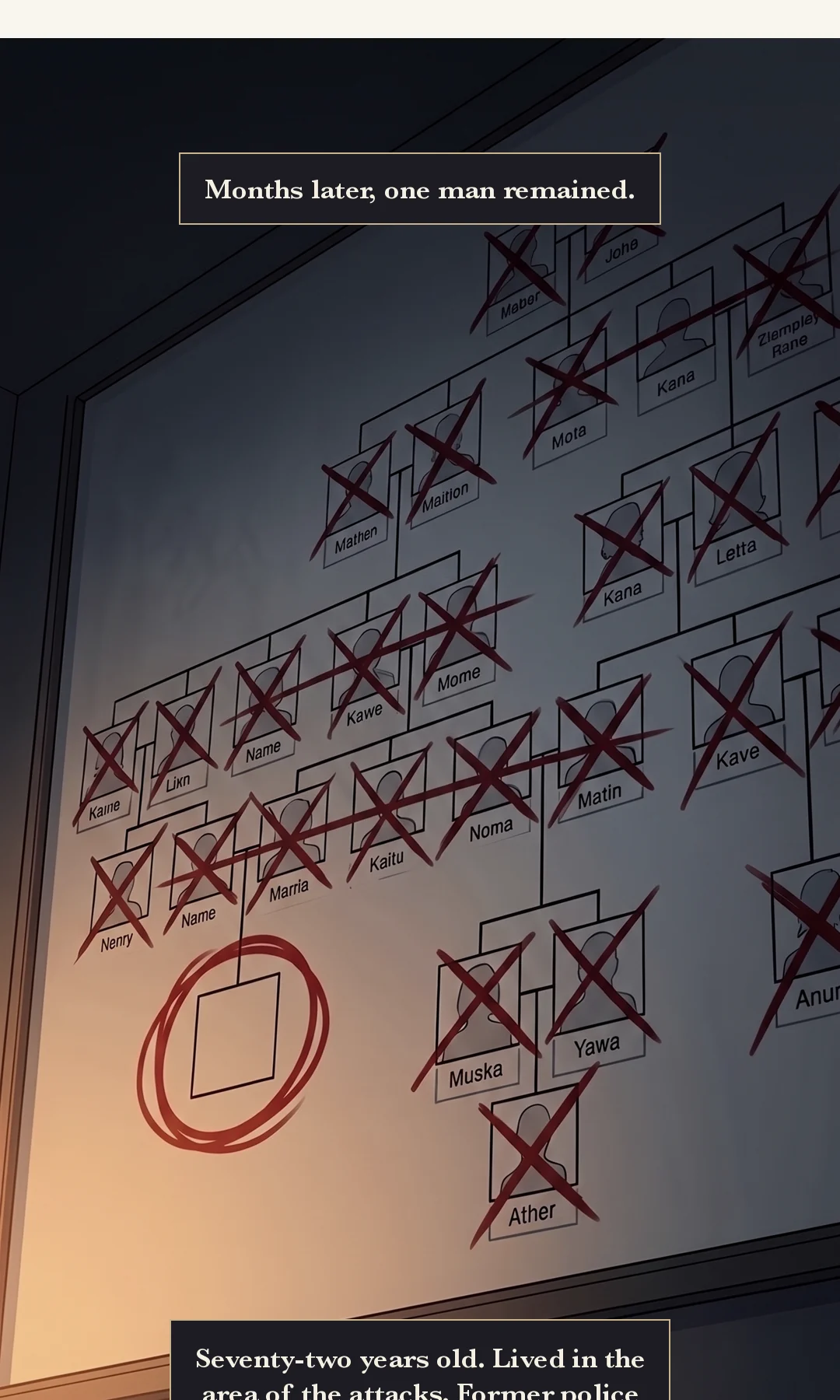
A family tree covering an entire wall in paper. — They were strangers with no face and no name, whose family lines met his some eight generations back. The genealogist Barbara Rae-Venter worked backwards from there.
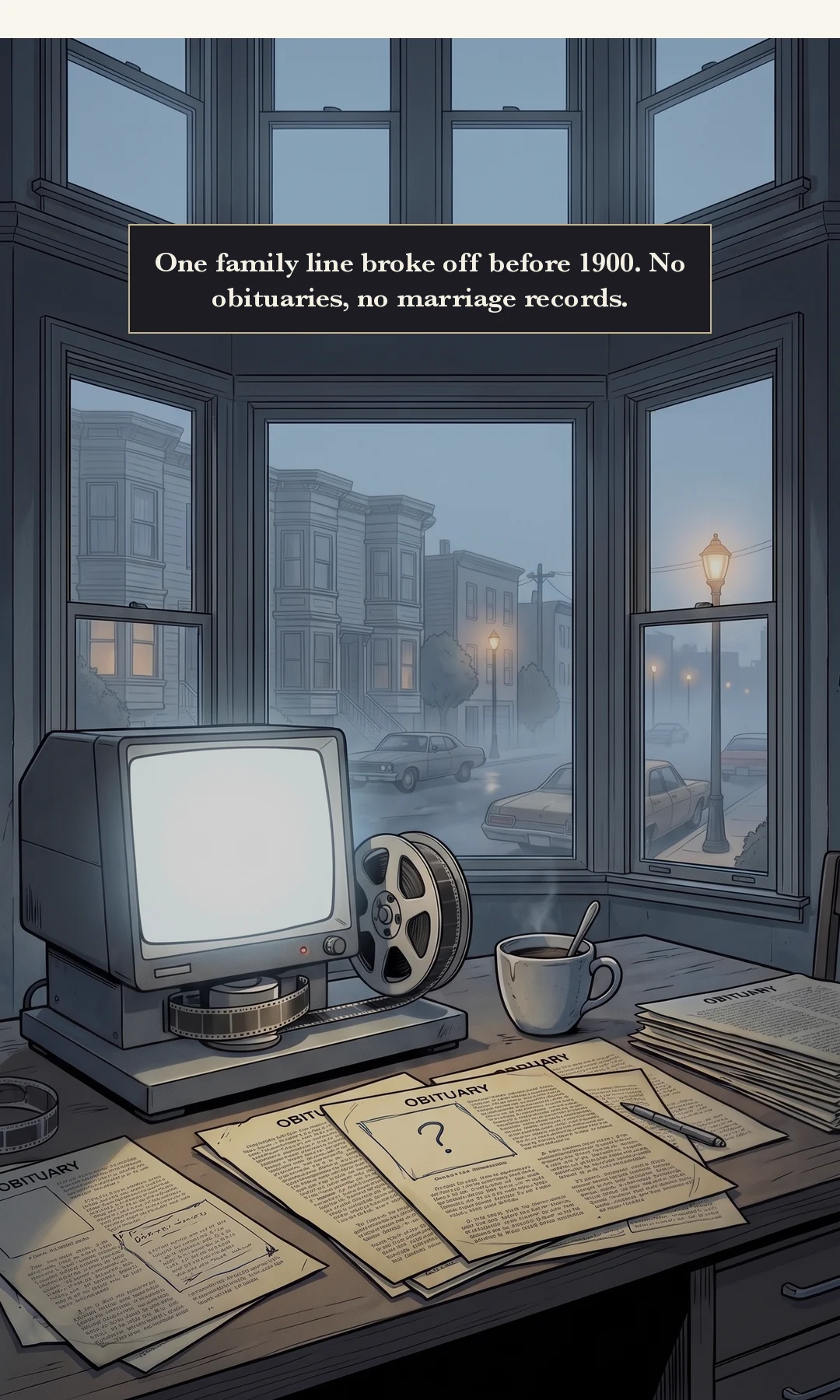
A dead end before dawn — the blank screen of a microfilm reader. — One branch broke off before 1900. No obituaries, no marriage records.
[card] Twenty-five family trees · one of them with a thousand people.
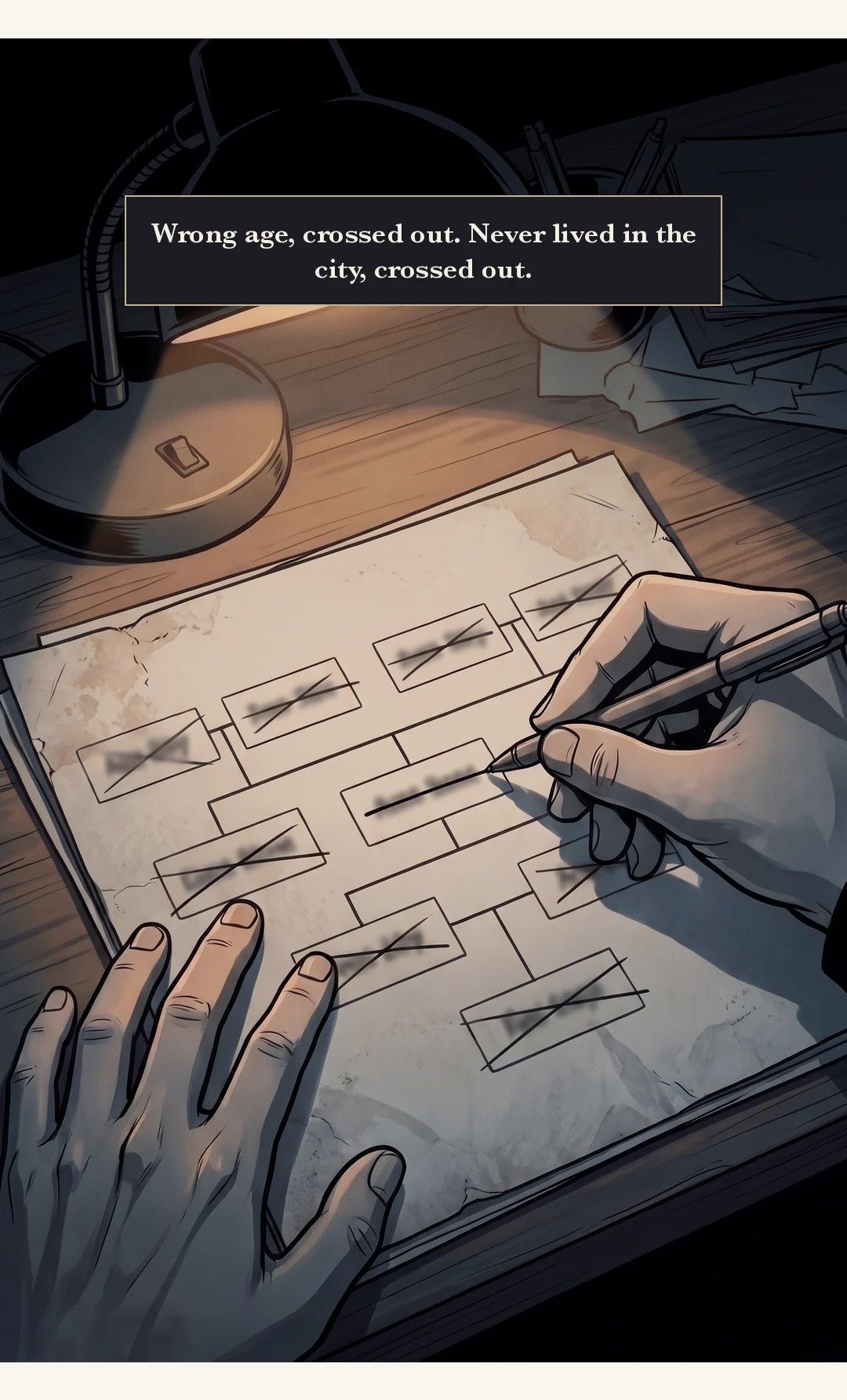
A line struck through a name. — If the age did not fit, cross it out. If he had not lived in that city, cross it out.
Among the crossed-out names, one box left. — Months later, one man remained. Seventy-two years old. Living in the area of the attacks. A former police officer.
[archive] The police sketch — that face, forty years earlier.
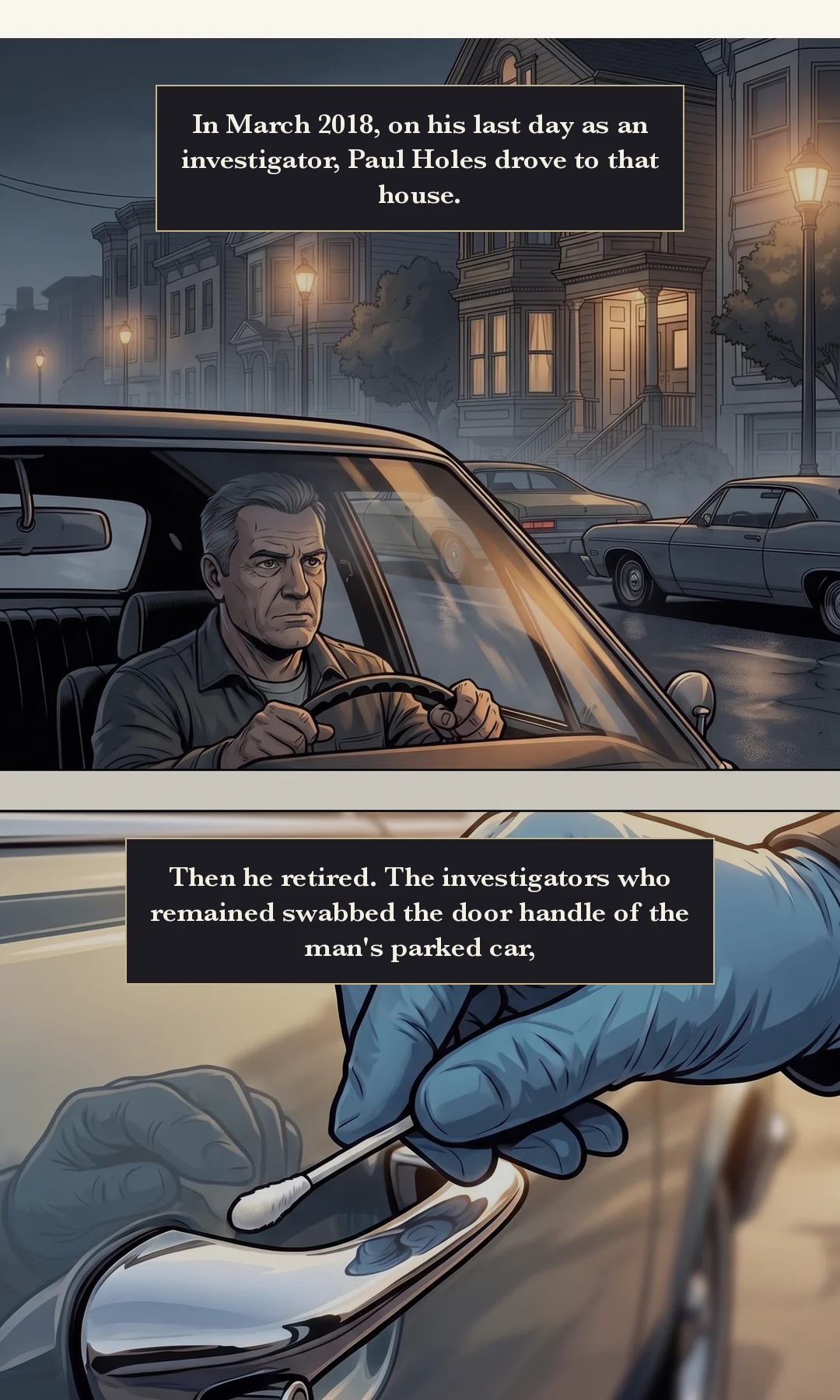
An investigator watching a house from inside a car. (his last day on the job) / A swab wiped over a car door handle. — In March 2018, Paul Holes drove to that house on his last day as an investigator. Then he retired. The investigators who remained swabbed the door handle of the car he had parked,
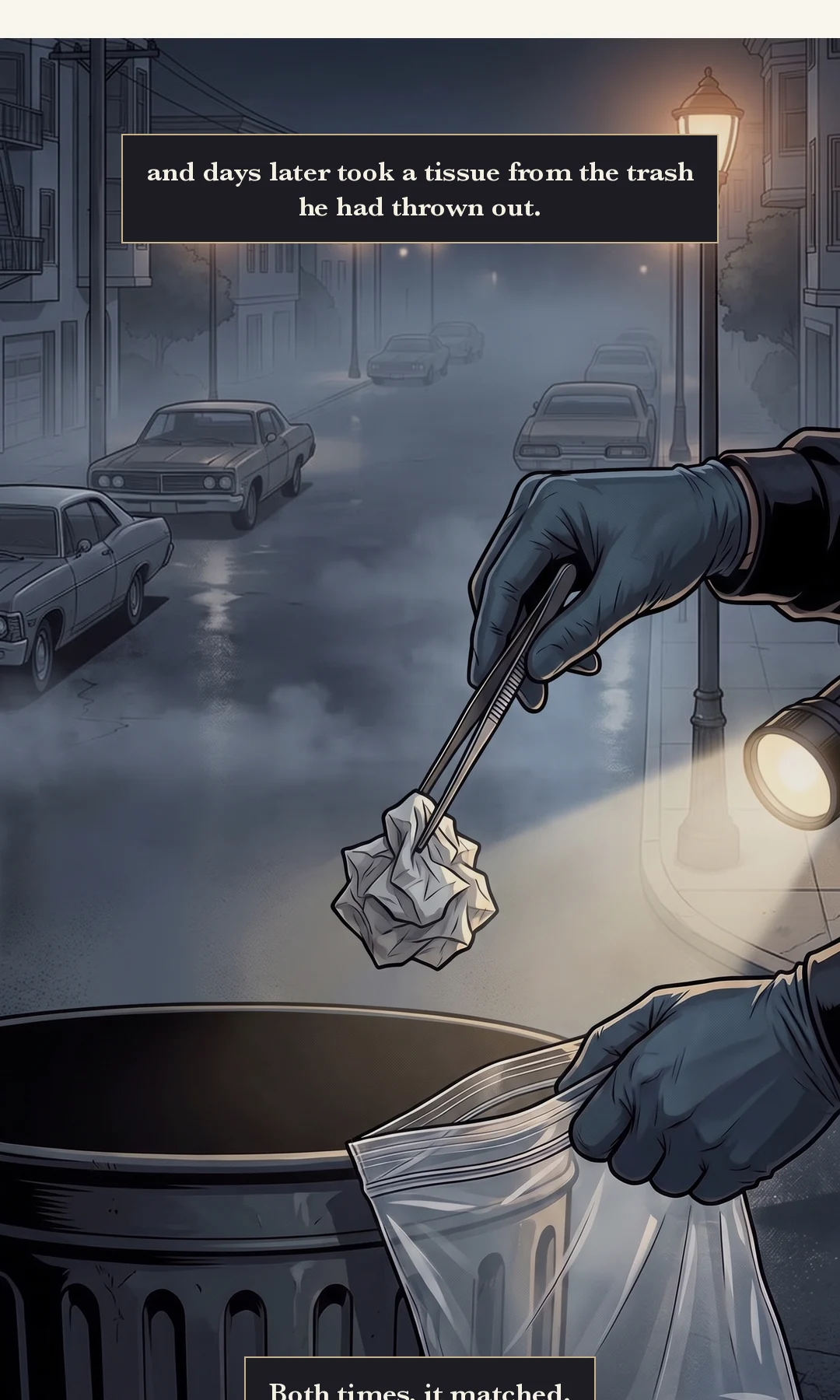
A tissue lifted out of a trash can. — and days later took a tissue from the garbage he had thrown out. Both times, it matched.
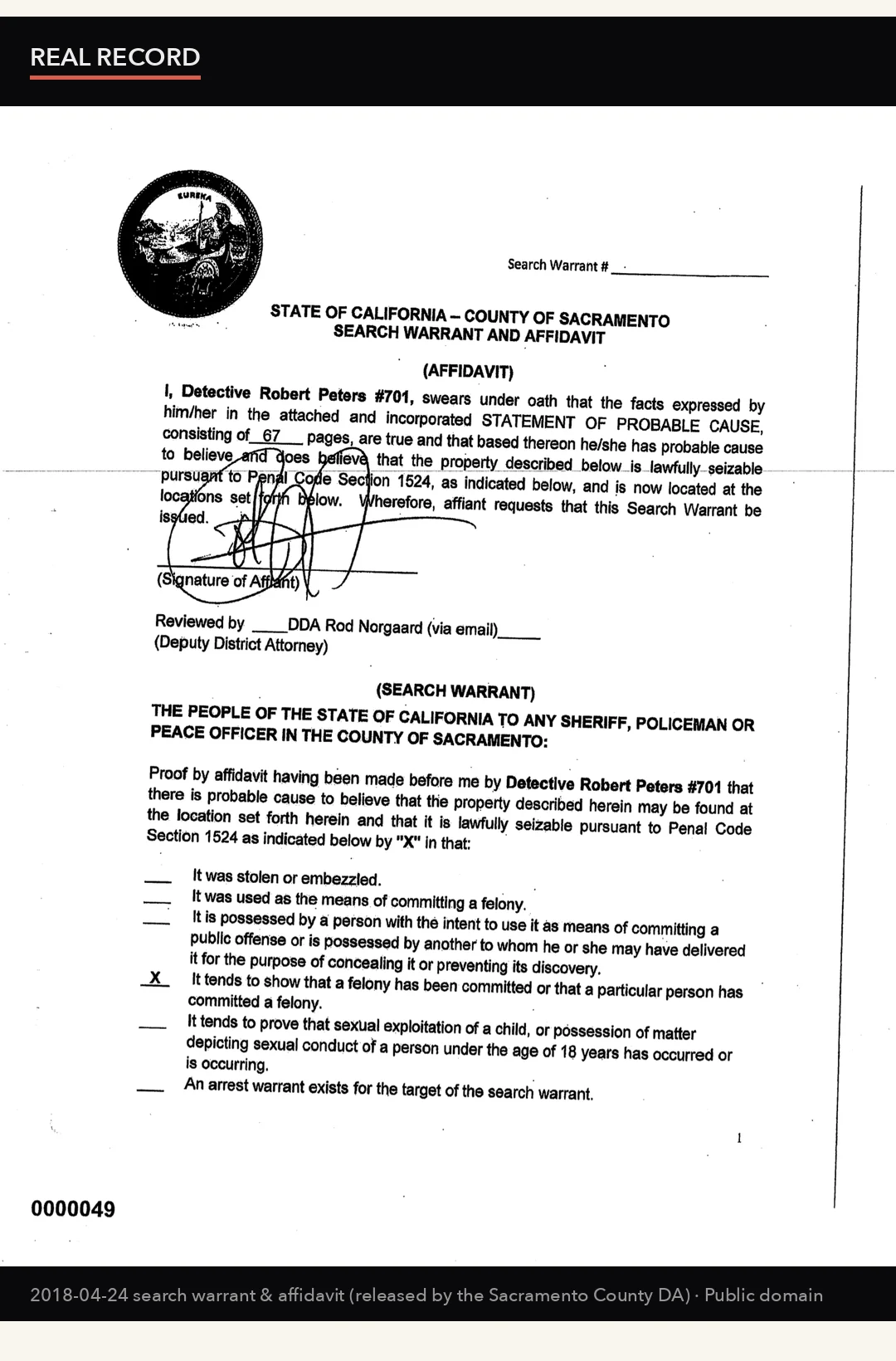
[archive] The search warrant and affidavit.
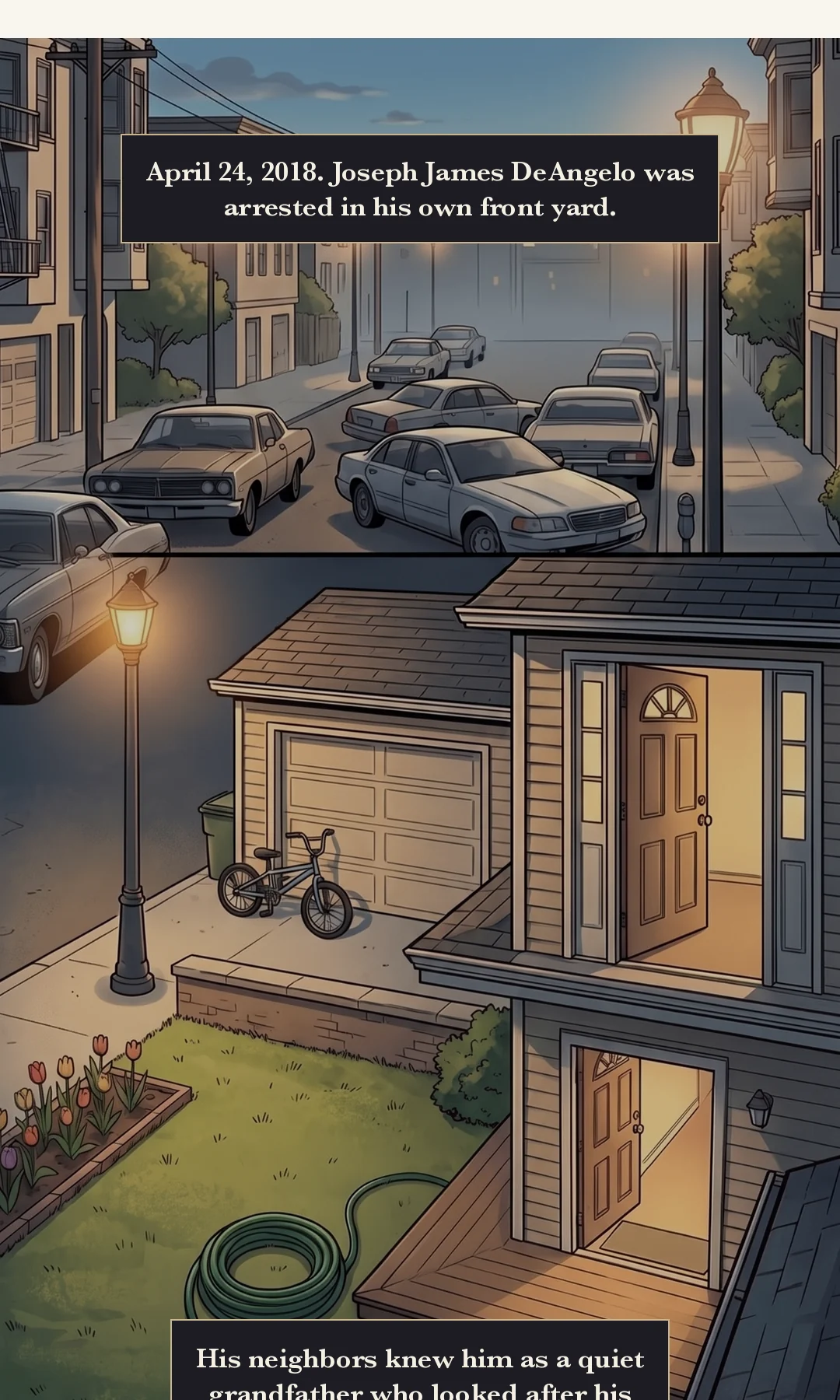
The yard of an ordinary house. April 24, 2018. — April 24, 2018. Joseph James DeAngelo was arrested in his own front yard. His neighbors knew him as the quiet grandfather who looked after his grandchildren.
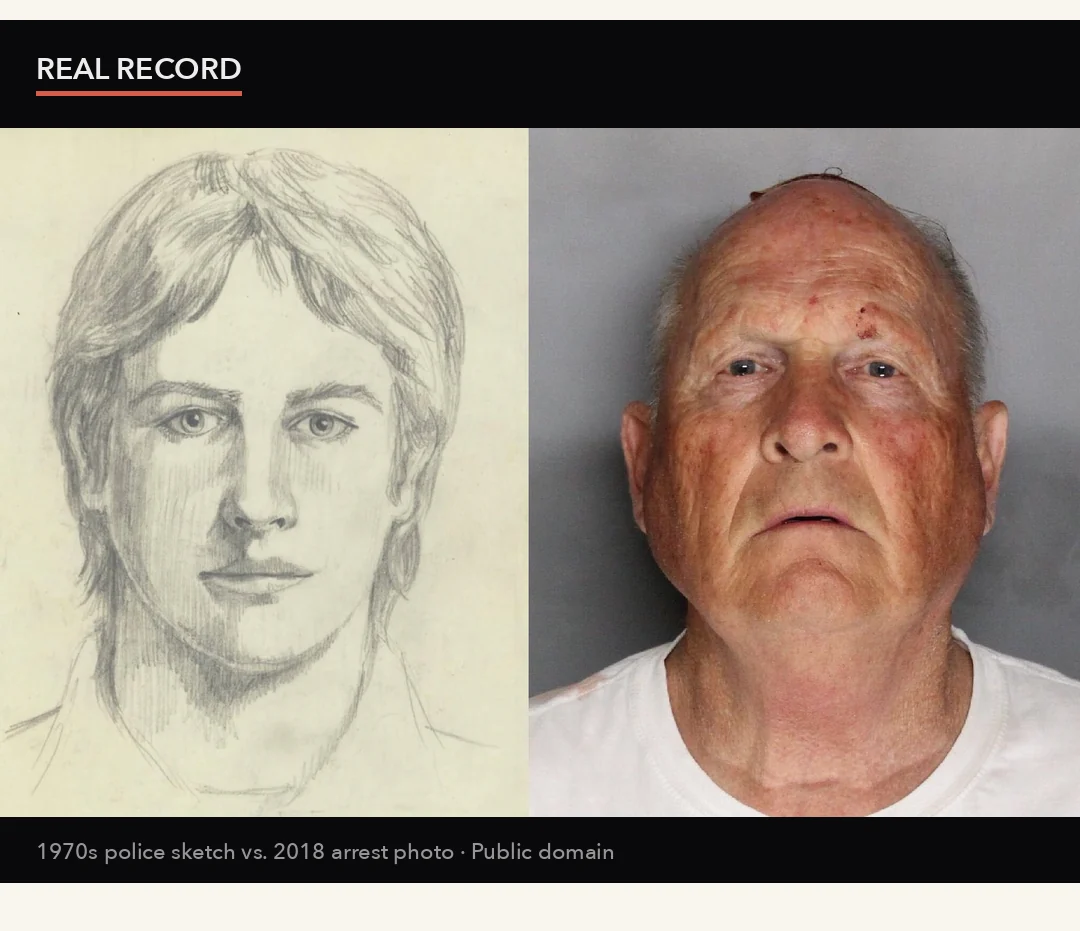
[archive] The sketch and the arrest photo side by side — the same man.
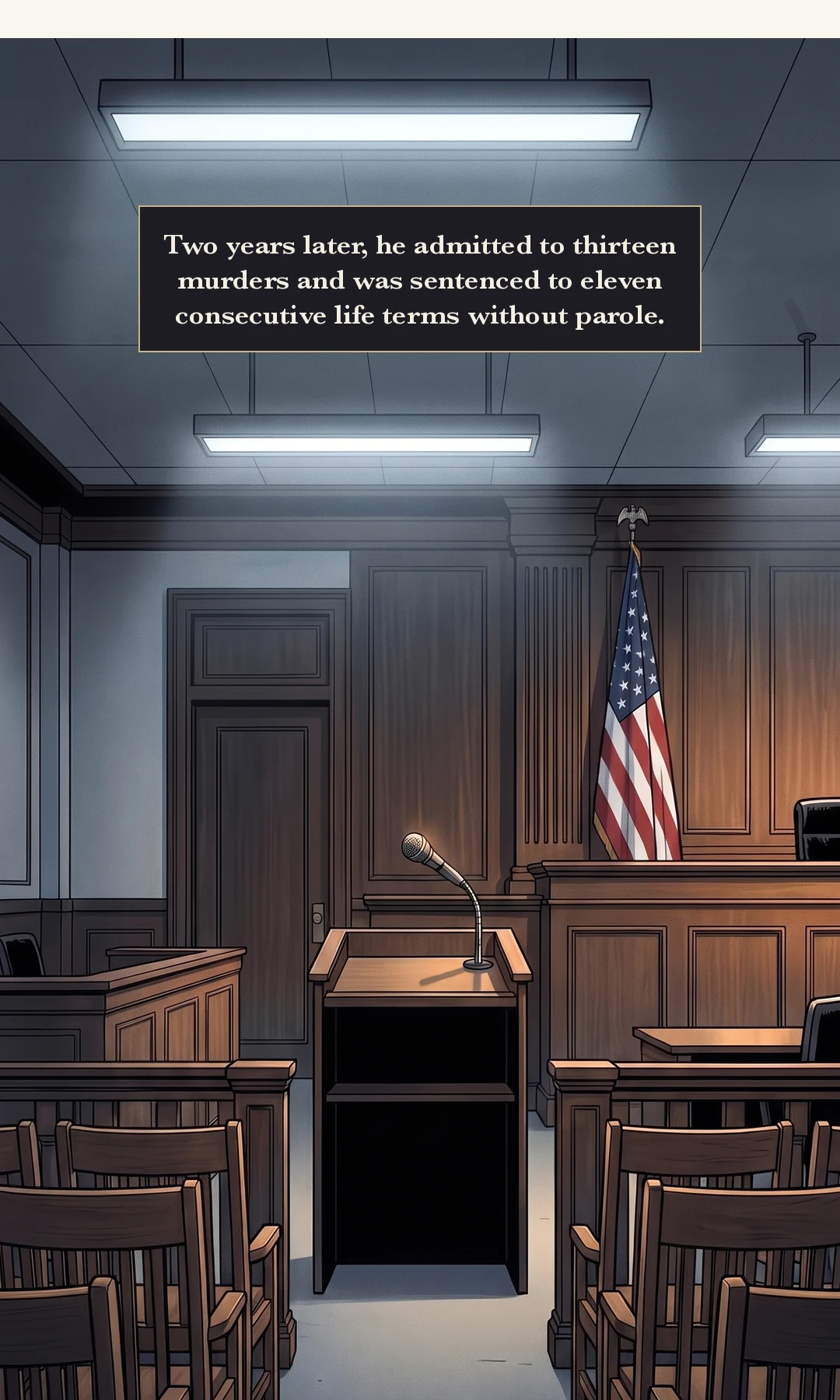
The empty witness stand and microphone in a courtroom. — Two years later, he admitted to thirteen murders and was sentenced to eleven consecutive life terms without parole.
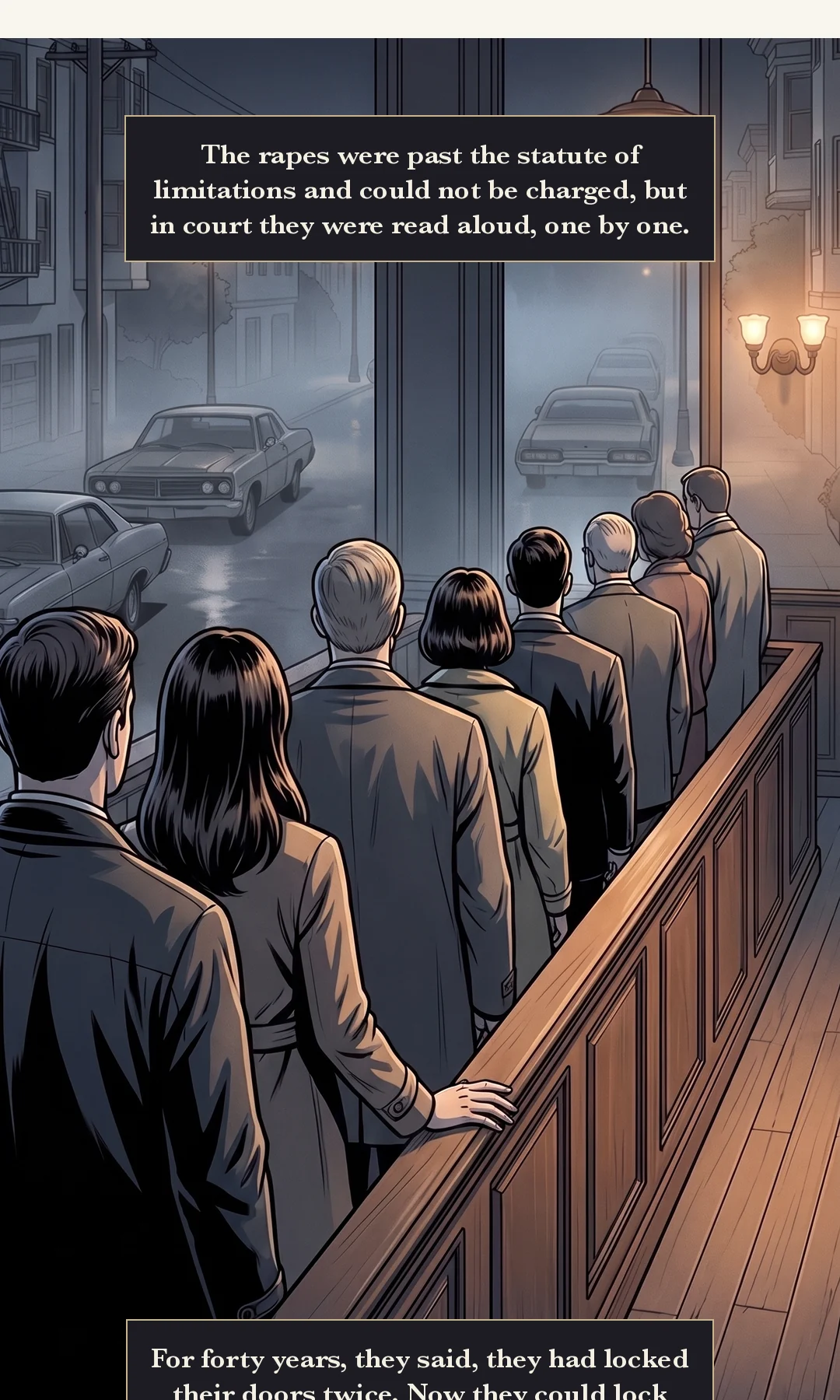
People standing at the witness stand, seen from behind. Their faces are not shown. — The rapes were past the statute of limitations and could not be charged, but in court they were read out one by one. That for forty years they had locked the door twice. That now, maybe, once would be enough.
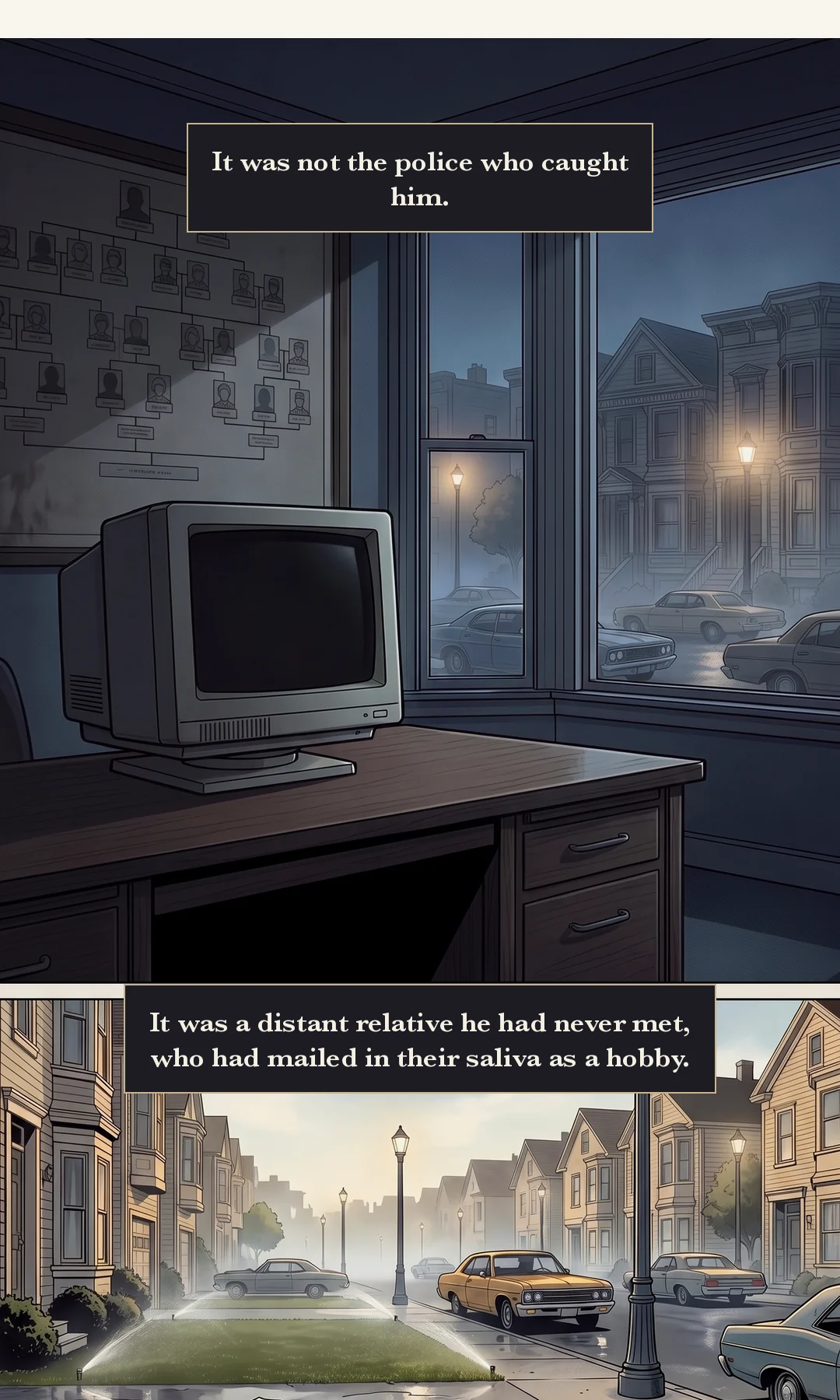
A monitor going dark. / A residential street in the morning. — It was not the police who caught him. It was a distant relative he had never met, who had mailed in their saliva as a hobby.
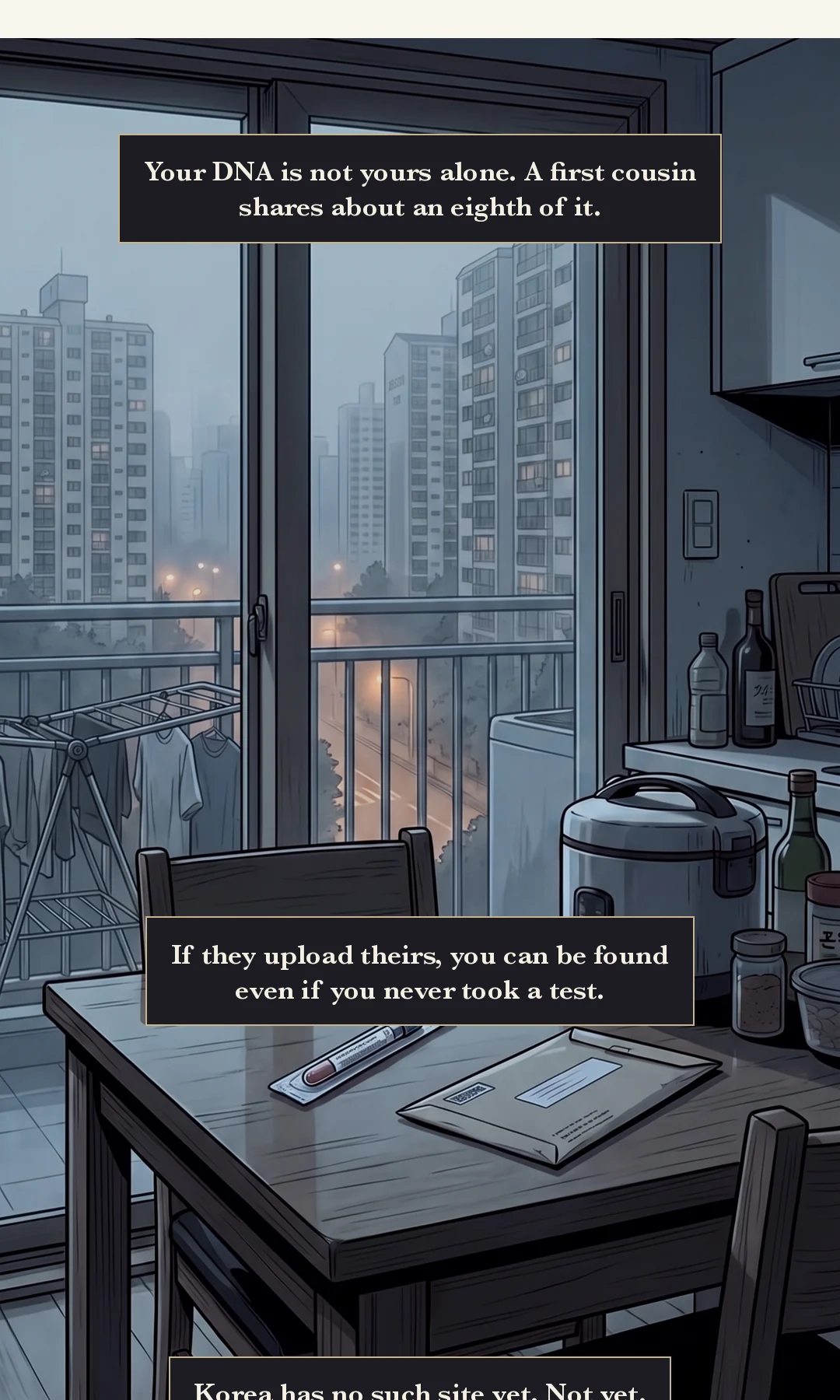
A test tube on a kitchen table in a Korean apartment. (ending) — Your genes are not yours alone. A cousin carries about an eighth of them. If they upload that, you can be found even if you were never in it. Korea has no such site yet. Not yet.

End of Ep. 1 · The Golden State Killer

You are all caught up. The next episode is on its way.

All episodes