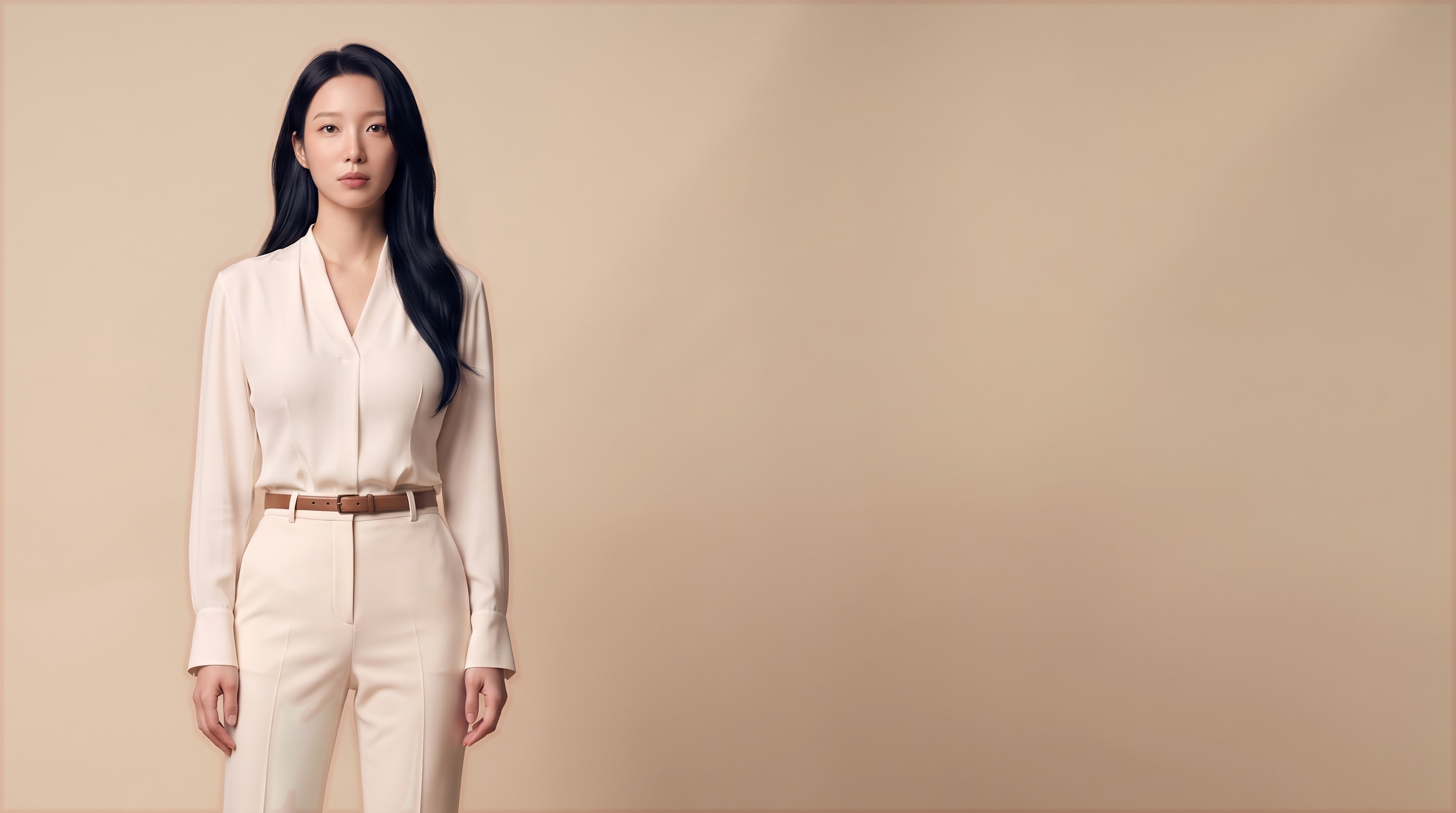
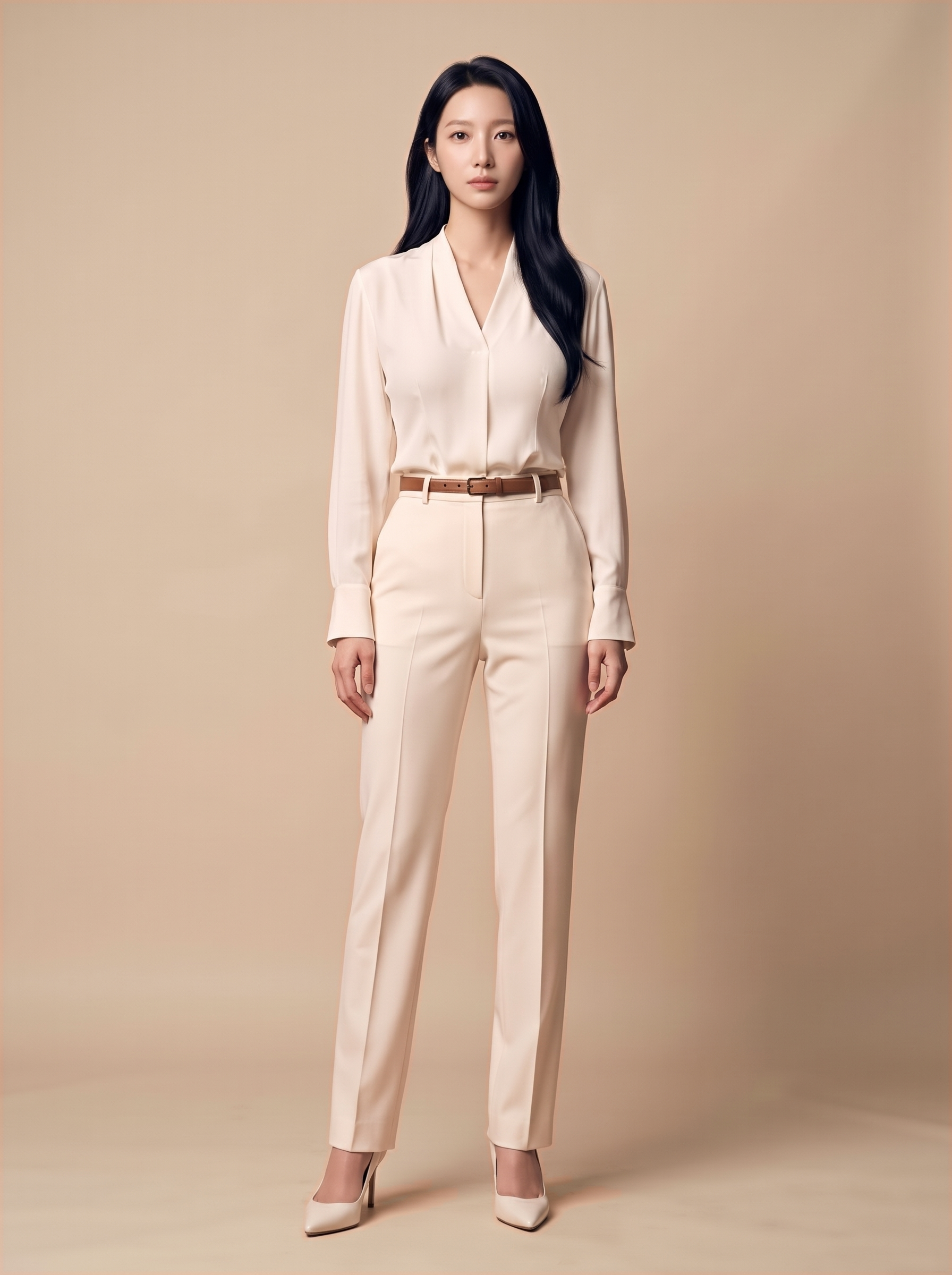
BIOGRAPHY
The story behind the actor.
Growing up
Born and raised in Seoul, Ji-woo often sketched the empty chairs and windows of the galleries where she waited for her mother. Seeing the same person fold their arms in front of a partition wall and let their hands drop by a window, she became interested in how a face reads differently when the place changes. At home she stood the people she drew beside her father's floor plans, but she preferred choosing for herself where they looked best over any adult's explanation. Her younger brother gave those figures absurd lines, and Ji-woo answered with even shorter ones, barely changing her expression. At school she spoke little, yet once she had an opinion about the order of images or the end of a scene, she did not easily give way. Her present neatness is less an obedient nature than a taste for keeping clear what she has seen and what she has chosen.
Why acting
In high school Ji-woo collected scenes from films that stayed with her, and looked first at where people were looking rather than at the plot. Wanting to understand both the making of an image and the work of the person reacting inside it, she entered a four-year arts university near Seoul in 2021 to study film and video. After enrolling she chose the acting track, wanting to make choices herself rather than only describe other people's expressions. In a camera-acting class in 2022, when her scene partner asked a question in a different tone from the one they had agreed, she clearly felt for the first time the moment a prepared gaze loses its place. The fact that a sense for the finished image alone could not answer a partner became the very reason she wanted to keep acting. She keeps her campus scene work as part of her training, and after graduating in 2025 she has continued to train reactions and breath in short scenes.
Turning points
In her university camera-acting classes, Ji-woo believed the first reaction caught on camera was the most honest, and that repetition made it look more and more constructed. In one scene, trying to recover the gaze and breath of a first take she had liked, she failed to really hear her partner's changed tone. Watching the rehearsal footage together, the balance of the frame held, but what remained was a person who did not answer the new question put to her. She admitted that a taste for choosing good scenes does not always make for good acting decisions. Since then, when a scene is shot three times, she notes one thing that changed in her partner instead of matching her own expression. This is not a named past production or a dramatic failure, but the process of continually correcting her own gaze within four years of acting training.
PERSONALITY & CRAFT
Character and craft.
Up close
She chooses her words carefully and holds herself neatly, so she can seem quiet and quick to give way. Even when she says little, she answers questions without letting the ends trail off.
With people close to her, her tastes are quite distinct. She wants to arrange a travel timetable by her own standards, and when choosing a menu she simply says what she does not want. With her brother or friends she plays by giving objects absurd names, her expression barely changing.
Preparing a scene
First she marks what the character newly learns before and after each line. She sketches the gaze and blocking simply, then, rather than guarding that composition, writes in one line what the character wants from the other person. Rehearsing alone, she says the same sentence three times from different starting states rather than perfecting one expression. When she meets her partner she notes where her first idea changed, and just before shooting she only glances at that note.
Early on she watches the blocking quietly, but asks specific questions when something is unclear. On repeated takes she does not try to reproduce the first one; she picks up one new piece of information from her partner's words and gaze. After emotional scenes she takes an agreed check-in moment before preparing for the next.
The texture of the acting
- In a frontal close-up, without big head movements, she shifts the focus of her eyes and the timing of a blink to make the moment she takes in what the other person says.
- Even when tears well up she does not let them fall at once; she controls her breath and the tension in her jaw to keep the action of trying to speak.
- She closes her sentences in a clear, bright upper-middle register, and even in whispered scenes she keeps the key word distinct.
A day off stage
In the late morning she goes for a free swim and eats a warm sandwich. In the afternoon she visits a small exhibition and, rather than copying out every label, sketches in her notebook the spot where she stood longest. At home she rearranges that space out of leftover paper and sends her brother a photo with only a few pieces glued down. When he asks what she has made, she writes back briefly that it is still under property development, and leaves the rest for the next day.