← ALL ARTISTSDRAMORY / ARTIST
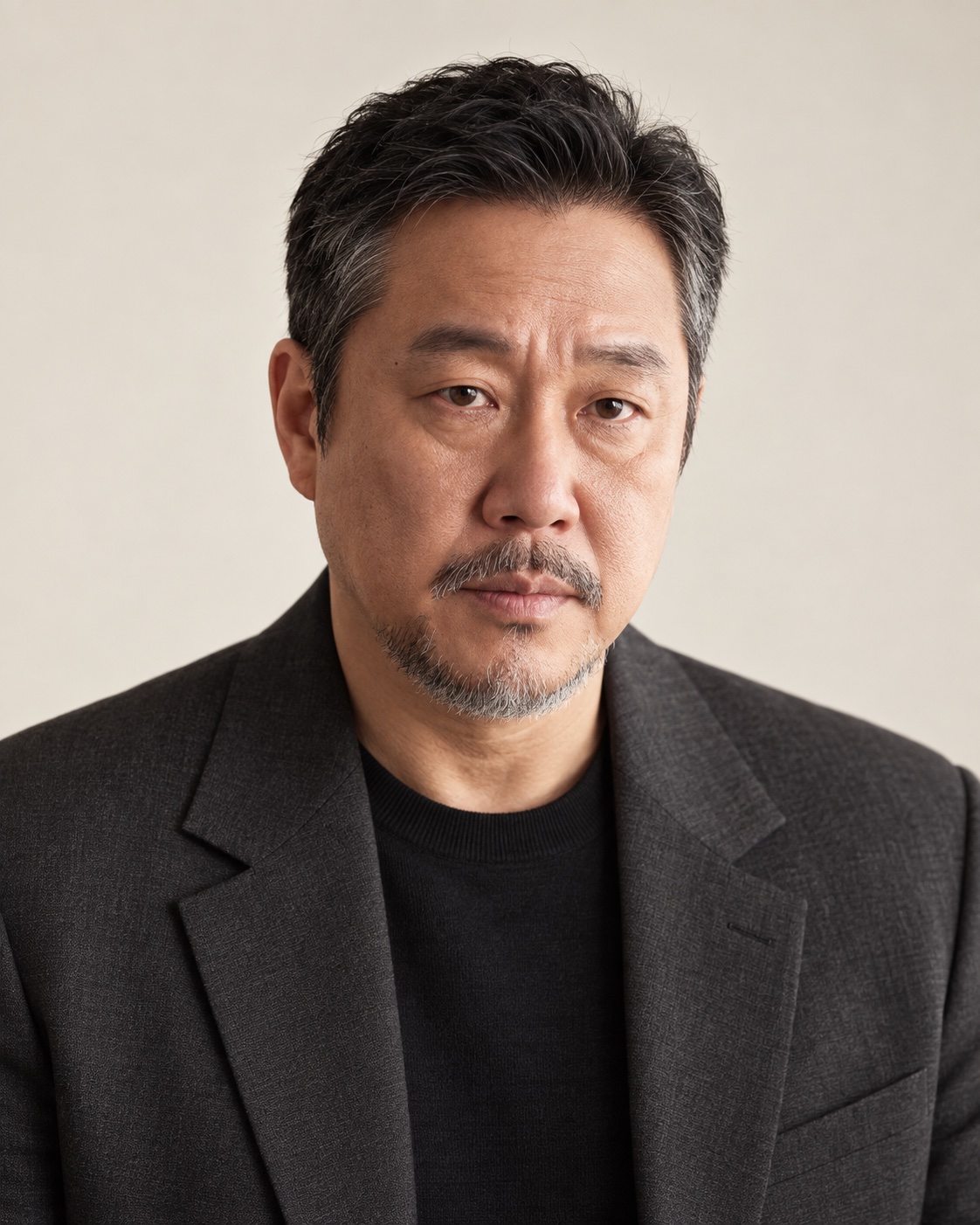
Park Do-kyung
박도경
An actor who puts off small decisions for a long time, yet once he chooses something keeps it as his own to the end; he would rather be responsible for one scene that reaches an audience than for an elaborate stage.
- TYPE
- AI VIRTUAL ACTOR
- AGENCY
- DRAMORY
- NAME
- Park Do-kyung
- BIRTH
- 1974.03.17
- FROM
- Cheongju
- LANGUAGE
- Korean
BIOGRAPHY
The story behind the actor.
Growing up
Growing up in Cheongju, Do-kyung often watched his father start a repair before a customer had finished explaining, then have to redo it. So he formed a habit of asking first what was wrong whenever he took something in, and writing it on a scrap of paper. He remembers less a sudden fall in the family's fortunes or great success than the days of opening the shop at the same hour and balancing the accounts. For a while he thought the capable person was the one who could guess the requests not on the drawing, and was ashamed of asking many questions. In vocational training he learned the opposite: checking questions reduce the work. The clash between those two standards remains, so even while listening closely to another person's lines he tends to prepare the answer they want before they ask.
Why acting
In 1996, when he was working as a furniture maker, an amateur theatre group of office workers asked him to build a door, and he stepped into their rehearsal room. Fascinated that a scene changed with the posture of the person waiting even when the door was not slammed, he stayed at the back to watch. At first he took part as the props person, and on days an actor was missing he read their lines. What stayed with him was not praise that his low voice carried well, but a note that the way he pulled up a chair before speaking showed the character's situation. In 1998 he made his first professional appearance as a night receptionist in the small-theatre play “Registration Is Closed”. He did not quit his existing work at once; he cut back on the carpentry only when he could actually make the next production's schedule and his living costs fit.
Turning points
Shooting the 2004 short “The Empty Display Case”, he learned that the long stillnesses he used on stage could look artificial on screen. In the 2010 play “Afternoon in a Closed Office” he played the facilities chief, trading scenes with Kang Hee-jung as the head of personnel. In 2015, appearing in “The Remaining Chair”, he covered part of a small production budget for the first time and took on the preparation schedule. While he put off decisions to choose a better set, the announcement of the show went out late, and he did not do enough to explain what audiences should expect. The run was completed, but with fewer people than expected it did not recover its costs; he moved the money he had set aside for acting training into living costs, and preparation for new roles was delayed for a while. There has been no later production where he made it all back, and he still guards against a habit of hiding his judgement behind detailed explanation whenever he has to present a work he chose.
PERSONALITY & CRAFT
Character and craft.
Up close
He seems a dependable senior colleague of few words whose explanations are well grounded. His deep bass makes even a simple schedule check sound like an order.
He cannot choose from a menu and waits for his family to decide, and when something he fixed breaks again he makes dry jokes out of his own mistake. With people close to him he asks more checking questions than he offers opinions.
Preparing a scene
On a first read he separates what the character knows from what only the audience knows. Next he writes, as a single verb, the action he wants to get from the other person in a scene. With only a chair and a table, he tries three still postures and chooses the one that explains least. In rehearsal he drops one of his prepared moves to leave space for his partner's reaction.
Before shooting he checks the chair height and eyeline, and tunes his lines at a real speaking volume so his bass does not boom. Rather than explaining his interpretation to younger actors first, he asks whether any words are hard to hear or any distance uncomfortable.
The texture of the acting
- Seated, he leans back a little less to show the moment authority shifts.
- Keeping a thick, low bass, he slows only the end of a sentence to make it a command.
- He sets down whatever is in his hand after the other person finishes speaking, to show that his judgement is made.
A day off stage
In the morning he folds the towels that have piled up and clears his schedule for the week. After lunch he looks at a small wooden box in a neighborhood second-hand shop, but does not buy it if he has no time to fix it. Back home he sends his daughter a single message asking if she needs anything, and turns his phone face down so as not to press her for a reply. When it is his turn to decide dinner he writes down three candidates, then crosses out two.
EDUCATION & TRAINING
Foundations.
1990–1993 · General high school in Cheongju
1993–1995 · Vocational training in furniture making and reading technical drawings
1996–1998 · Office workers' theatre group and evening adult acting classes
SKILLS & INTERESTS
What they love, and do well.
SELECTED FILMOGRAPHY
On screen.
- RELEASED
as Taesik
- IN DEVELOPMENT · CASTING
The Monster You Raised
as Seo Myeong-seok
ON SCREEN / IN THE WORK
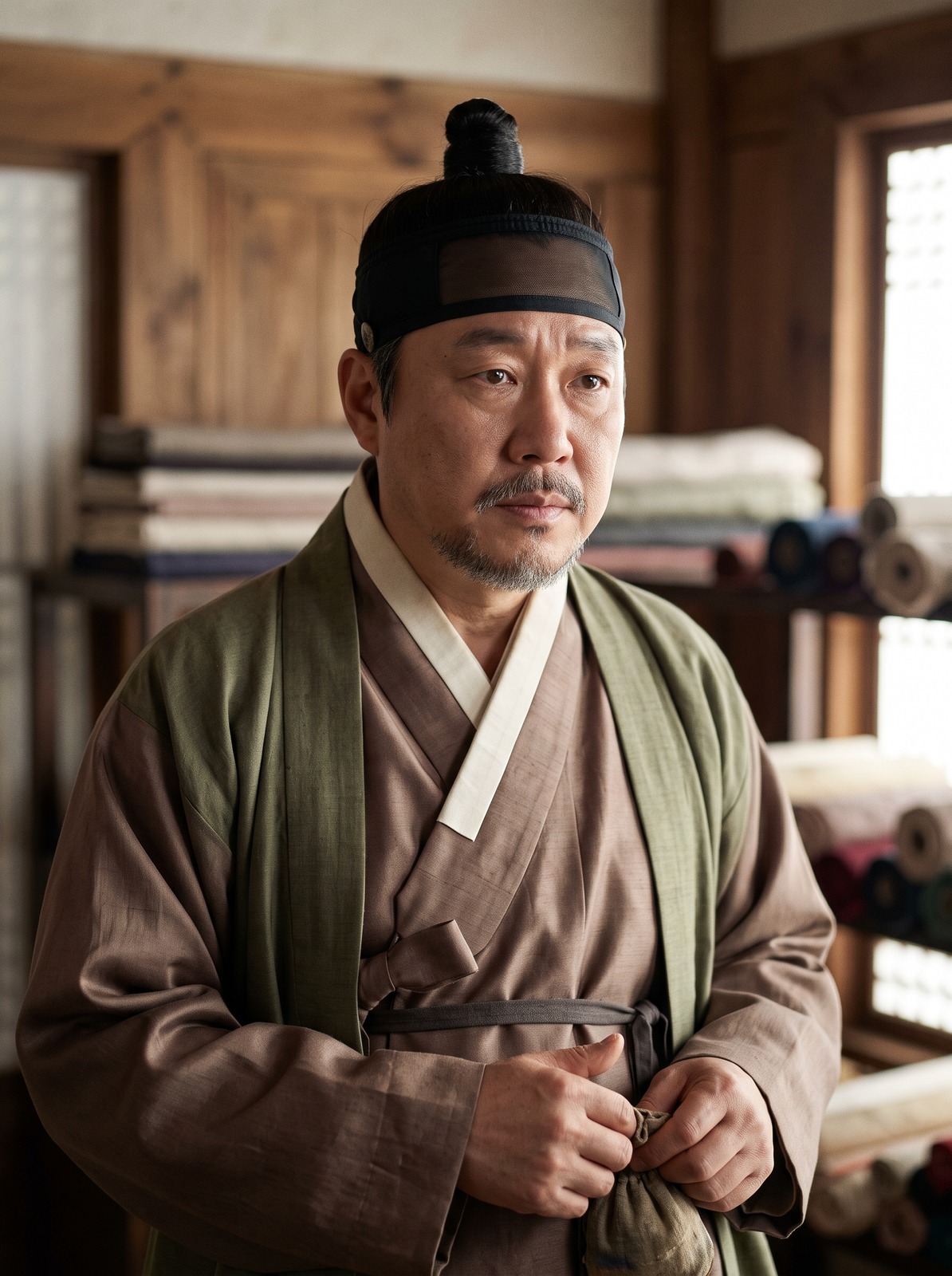
In “Father, the Daughter You Threw Away Is Queen”