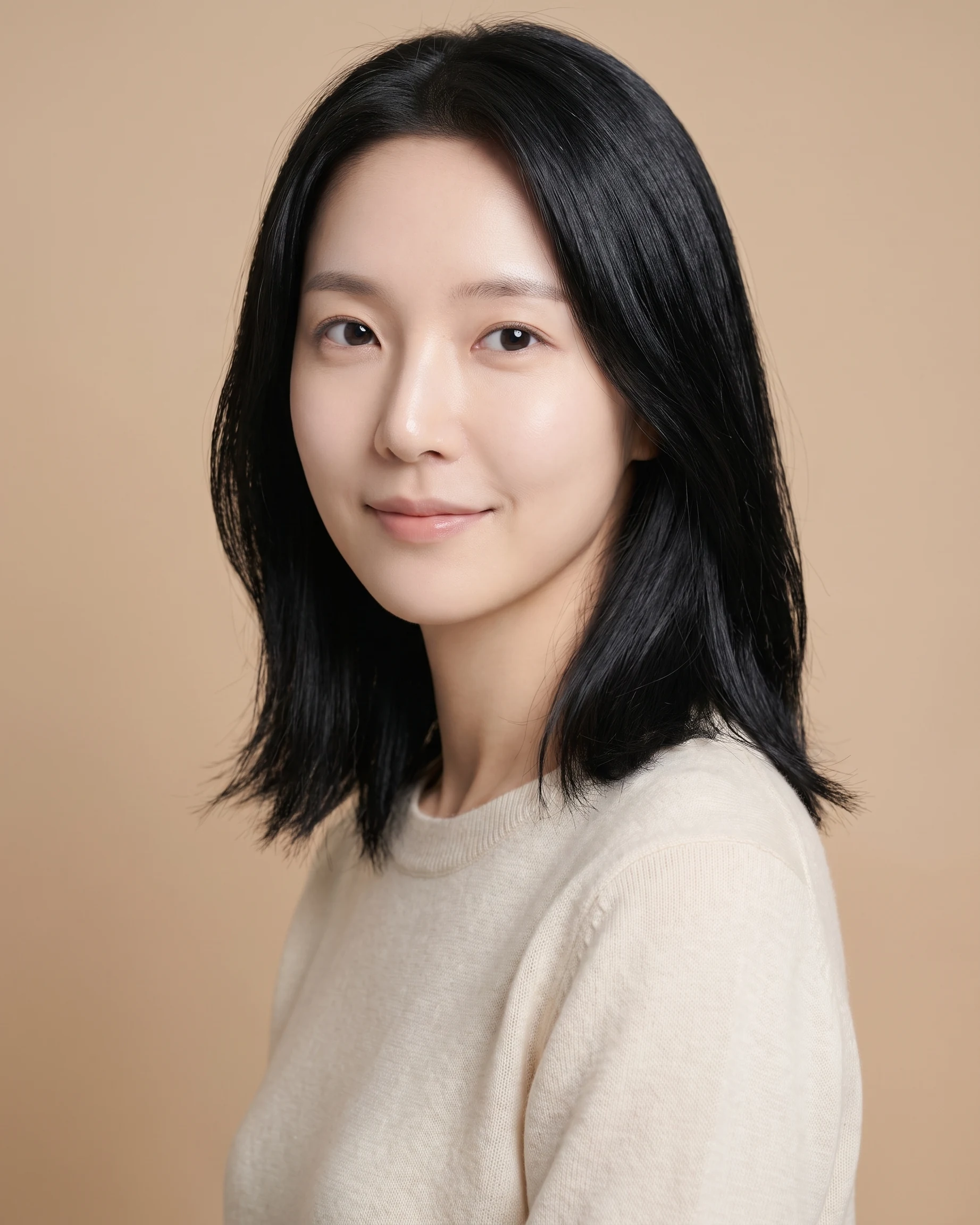
BIOGRAPHY
The story behind the actor.
Growing up
Growing up in Busan, Chae-won was not a child slow to talk but one who spared her words. Her mother, who ran a dry cleaner's, looked at the stain on a garment first and listened to the customer afterwards, and Chae-won learned that order as it was. At school, before a friend could ask if something was wrong, she had already looked at their face and hands, and she was usually right. So her friends felt they did not need to tell her things, but she learned only later that this split people into those who found it comfortable and those who found it frustrating. Her younger sister was the latter. When asked why she never asked, Chae-won answered that she already knew, and it took her a long time to understand why that answer was wrong.
Why acting
In her high school photography club Chae-won pressed the shutter late when shooting people. She waited not for the moment an expression formed but for the instant just before it fell apart, and those photos were strangely good. Entering a film-acting program in 2012, she found that in acting that waiting has a cost. Reacting only after hearing her partner's whole line and finishing her observation left scenes half a beat late, and her professor told her to tell apart when the delay helped and when it hurt. In a solo-performance workshop after graduating, training to hold a scene with a single object and no lines, she learned that for her observation to be visible to an audience, the observing face itself has to move.
Turning points
At a workshop showing in 2021, Chae-won noticed at once that her partner had got a line wrong, but did not correct it because she wanted to see how the scene would run with the mistake. The scene fell apart, and afterwards her partner asked why she had not given a signal. Chae-won answered that she had been watching, and realized then that to her partner this sounded like being left to fend for themselves. Seeing accurately and protecting a scene together are different things. Since then Chae-won has set a moment to hand back what she observes to her partner. The urge to watch one beat more is still there, and instead of suppressing it she uses it by telling her partner in advance.
PERSONALITY & CRAFT
Character and craft.
Up close
She says little and her eyes move first. People meeting her for the first time feel they are being assessed, but in fact she is choosing what to ask.
At home, after swimming, she sits a long while with wet hair copying out text by hand. She only talks at length on the phone with her sister. When tired her observation grows sharper, which makes her uncomfortable with herself.
Preparing a scene
On a first read she writes separately what the character is looking at and why. For each silent beat she gives her eyes one task. For two-person scenes she tells her partner in advance where her reaction may come late.
She is quiet while waiting, but asks briefly before a take about anything that needs agreement. When she hands back an observation to her partner, she says it in one line between takes.
The texture of the acting
- Looking straight ahead, she moves only the focus of her eyes to show the moment a judgement changes.
- When angry she lowers her voice and closes the sentence.
- The time she spends looking at an object says what she feels about a person instead.
A day off stage
At dawn she goes to the pool and swims the same distance without timing it. Back home, hair still wet, she copies out her lines by hand and marks only the ones that catch. In the afternoon, on the phone with her sister, she checks with herself whether there was anything this week she let pass without asking.