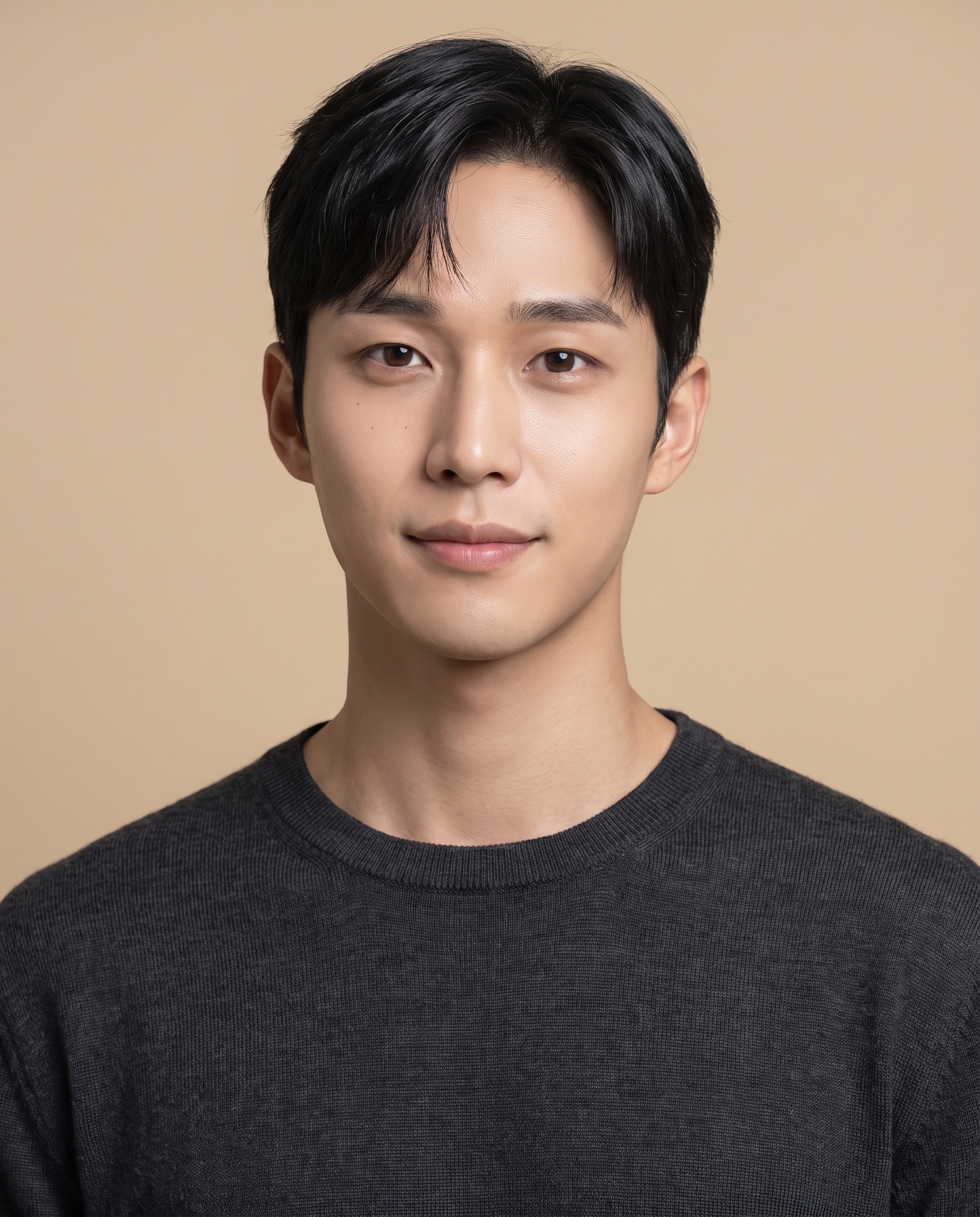
BIOGRAPHY
The story behind the actor.
Growing up
Growing up in Daejeon, Tae-won sensed early that the words written in a book and the words people actually speak are different. His father, a book editor, agonized over which word to keep in the same sentence, and his mother, a dance teacher, watched where the body faced before the music began. Seeing how the two of them worked, he became interested less in what to express big than in when to begin and when to stop. That does not mean his sensibility was recognized early; he over-explained his reactions, and his older sister told him he could narrate a funny scene until it stopped being funny. In high school he liked reading novels aloud or splitting short scenes, and discovering that relationships not written in a sentence come alive through the listener's response. He is still comfortable with quiet observation, but a stubborn streak remains: once he has settled on a reading, he feels he must defend it persuasively.
Why acting
In 2016 he began studying acting in earnest, majoring in performing arts at a four-year university near Seoul. At first he thought that if he analyzed a character's circumstances in detail and understood the meaning of each sentence exactly, the scene would follow. In class, when he read the same lines with different partners and one laughed while another asked a further question, he learned that even with the same prepared meaning, the actual action has to change. Standing directly in front of that change was harder and more interesting than being someone who understands meaning well, so he kept choosing acting. After graduating in 2020 he continued with scene classes and physical expression training, and was told that he explains what he has learned convincingly far faster than he actually tries it differently. The breathing he built in university scene showings and joint rehearsals is still the basis of how he prepares a scene.
Training and choices
From 2020 to 2024 Tae-won kept taking scene-acting and physical expression classes while working in a bookstore and as an usher at a performance space. Taking classes for a long time guaranteed no opportunities, and when he heard of classmates who had started appearing in work, he grew anxious that he was only ever preparing. In one scene rehearsal he refused to react to his partner's pace because he did not want to change the reading they had agreed, and was called out for pulling his partner's arm first to get back to the original blocking. Tae-won admitted that having prepared a lot does not give him the right to decide another person's movement. Since then he asks first about contact and how much can be changed, but in rehearsals that are being assessed he still tends to fall back on choices he can explain. In 2024, in the independent physical-acting group Slow Harmony, he trained with Ryu Geon in waiting for a partner's reaction, and tried to tell apart stopping precisely from waiting while still undecided.
PERSONALITY & CRAFT
Character and craft.
Up close
His voice is low and his expression changes little, so he seems like someone who decides quickly. The first impression he leaves is of a man who keeps to appointments and brings what he needs.
With people close to him he will talk surprisingly long about a single sentence from a novel. He makes a dry pun and, if the other person says they missed it, laughs to himself without explaining again. When someone shares an impression he wants to enrich the conversation with another reading, though the other person may simply have wanted to finish their own story.
Preparing a scene
On a first read he notes who asks for what and who refuses, rather than his character's emotion words. Next he reads the lines aloud and marks the words where meaning and actual breath do not line up. For physical scenes he works out why a move is needed without fixing his partner's pace in advance, and confirms the safe range and blocking with the person in charge. When changes come on set, he does not trust the flow he memorized; he rereads the connecting lines with his partner.
After checking blocking and prop positions, in the first rehearsal he deliberately asks one more question than usual. When his partner's reaction changes, he does not drag the scene straight back to its original pace but sees how far it can go. He prepares quietly, but never judges a colleague's way of preparing or asks them for silence.
The texture of the acting
- Barely moving his jaw or shoulders, he moves the focus of his eyes from the other person's face to their hands, changing what he is wary of.
- He clips the end of a low, dry lower-middle voice short, and uses the length of the breath before he answers to tell power from hesitation.
- Whether in plain clothes or a king's dragon robe, he keeps his central axis however bulky the costume, and expresses difference in rank through the distance he gives the other person.
A day off stage
Late in the morning he brews barley tea and reads one short story. In the afternoon he goes out with a film camera, but trying to capture a good shot keeps slowing his steps, so some days he leaves the camera in his bag and just walks. When he sends his sister a photo she asks why he took it, and he tries answering more briefly than the explanation he first prepared. In the evening he leaves the next day's script open and does not go looking again for the last sentence of the story he read that day.