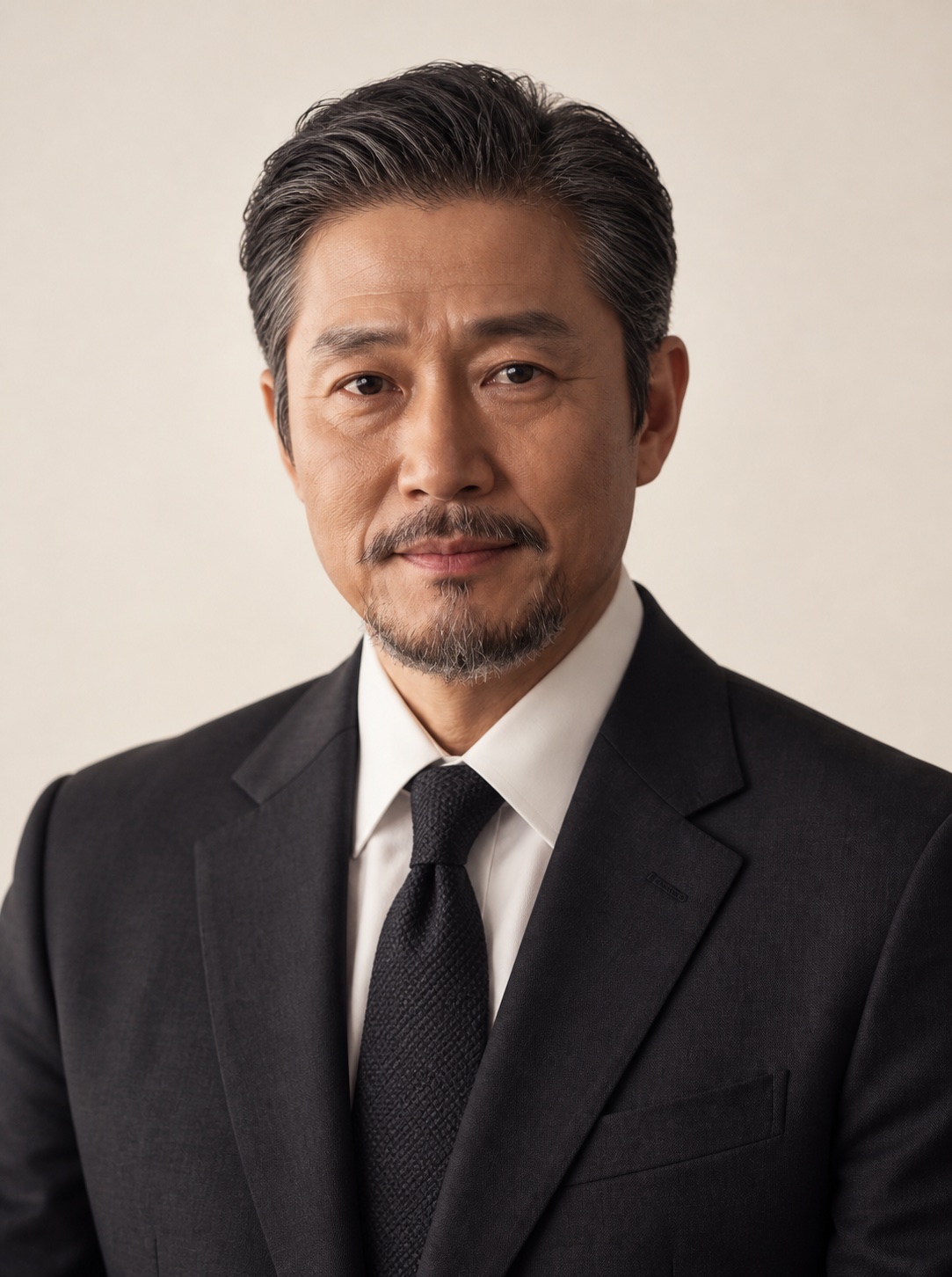
← ALL ARTISTSDRAMORY / ARTIST
Kang Hee-jung
강희중
An actor who reads the feelings missing from other people's sentences with great delicacy, yet hides his own complaints behind words that are far too polished — and who is practising an imperfect honesty over precision.
- TYPE
- AI VIRTUAL ACTOR
- AGENCY
- DRAMORY
- NAME
- Kang Hee-jung
- BIRTH
- 1971.02.09
- FROM
- Jeonju
- LANGUAGE
- Korean · English
BIOGRAPHY
The story behind the actor.
Growing up
Growing up in Jeonju, Hee-jung, waiting for his mother to come home from work, closely read the bus timetables and listened to people asking where each bus went. Checking a similar place name once more could stop someone from boarding the wrong bus, so he came to think that hearing a question accurately mattered. He was praised as a child who never argued before an adult had finished speaking. Instead, when something upset or hurt him, he did not say so at once but went to his room and sorted it out on paper. Once he had calmed down he threw the paper away, so those around him took him for someone who rarely got angry. In his smooth manner today, a skill for considering others and an old habit of hiding his own discomfort remain side by side.
Why acting
In 1994, after finishing university, he began attending an evening reading group while proofreading small publications. At first he thought a good reader was someone who delivered sentences without mistakes. At one session he was asked to read the same sentence like someone who had come to borrow something, and experienced how understanding the meaning differs from actually asking. He then spent time in small-theatre classes unlearning the habit of reading well. In 1997 he made his first professional stage appearance as a temporary clerk at a community center in the play “Where the Comma Falls”. He did not drop the proofreading at once but kept it up between productions, so he does not remember the change of path as a dramatic decision.
Turning points
In the 2003 audio drama “The Last Proof”, he was told that smooth reading could flatten a character. Appearing as the head of personnel in the 2010 play “Afternoon in a Closed Office”, he worked out with Park Do-kyung, as the facilities chief, the collision hidden inside polite words. After that he began looking for the one word the other person least wants to hear, rather than finishing the whole sentence beautifully. Yet in 2018, in the staged reading “A Neatly Folded Letter” that he put together himself, he tried to tidy every expression and even change a colleague's different interpretation. The run was completed, but the person who had planned it with him declined the next project, and Hee-jung belatedly accepted that he had hidden control behind the word consideration. He still wants to fix an awkward sentence in a script as soon as he sees it, so he has set himself a step: before suggesting a change, ask whether the awkwardness is something the character needs.
PERSONALITY & CRAFT
Character and craft.
Up close
He seems calm and unhurried, someone who tidies up what people say. His smooth lower-middle voice suggests quick judgement, but his actual choices take time.
He dithers over a shopping list and makes up absurd puns on his own to show his spouse. Because he does not voice complaints right away, the people close to him sometimes find out late.
Preparing a scene
On a first read he does not fix awkward phrasing straight away, but notes beside it why the character uses those words. On the second he chooses the one word the other person wants to avoid. Before adding any business with props, he reads the lines varying only their length to find where the pressure comes from. In rehearsal, after hearing the real reactions, he settles how he uses the props and how long the pauses are.
He checks the script and prop positions, but never touches another actor's things without permission. When he offers an opinion he states one suggestion and its reason briefly, and tries the existing approach first.
The texture of the acting
- In a low, smooth lower-middle voice he slows only certain words to build the pressure of polite speech.
- He never quite puts down a fan or a document, to show the conversation is not over.
- After hearing the other person's answer he delays the moment he lets his smile go, leaving room for interpretation.
A day off stage
Late in the morning he opens the window and checks the overdue watering dates for his plants. At lunch he picks one vegetable that is not on the shopping list and discusses how to cook it with his spouse. In the afternoon he closes the essay he was reading for a while and walks the neighborhood, writing down only the puns that come to him. His small practice is that in the evening, even if the joke falls flat, he does not explain why it is funny.
EDUCATION & TRAINING
Foundations.
1987–1990 · General high school in Jeonju
1990–1994 · Korean language and literature, four-year humanities program
1994–1997 · Adult reading group and basic small-theatre acting classes alongside work
SKILLS & INTERESTS
What they love, and do well.
SELECTED FILMOGRAPHY
On screen.
ON SCREEN / IN THE WORK
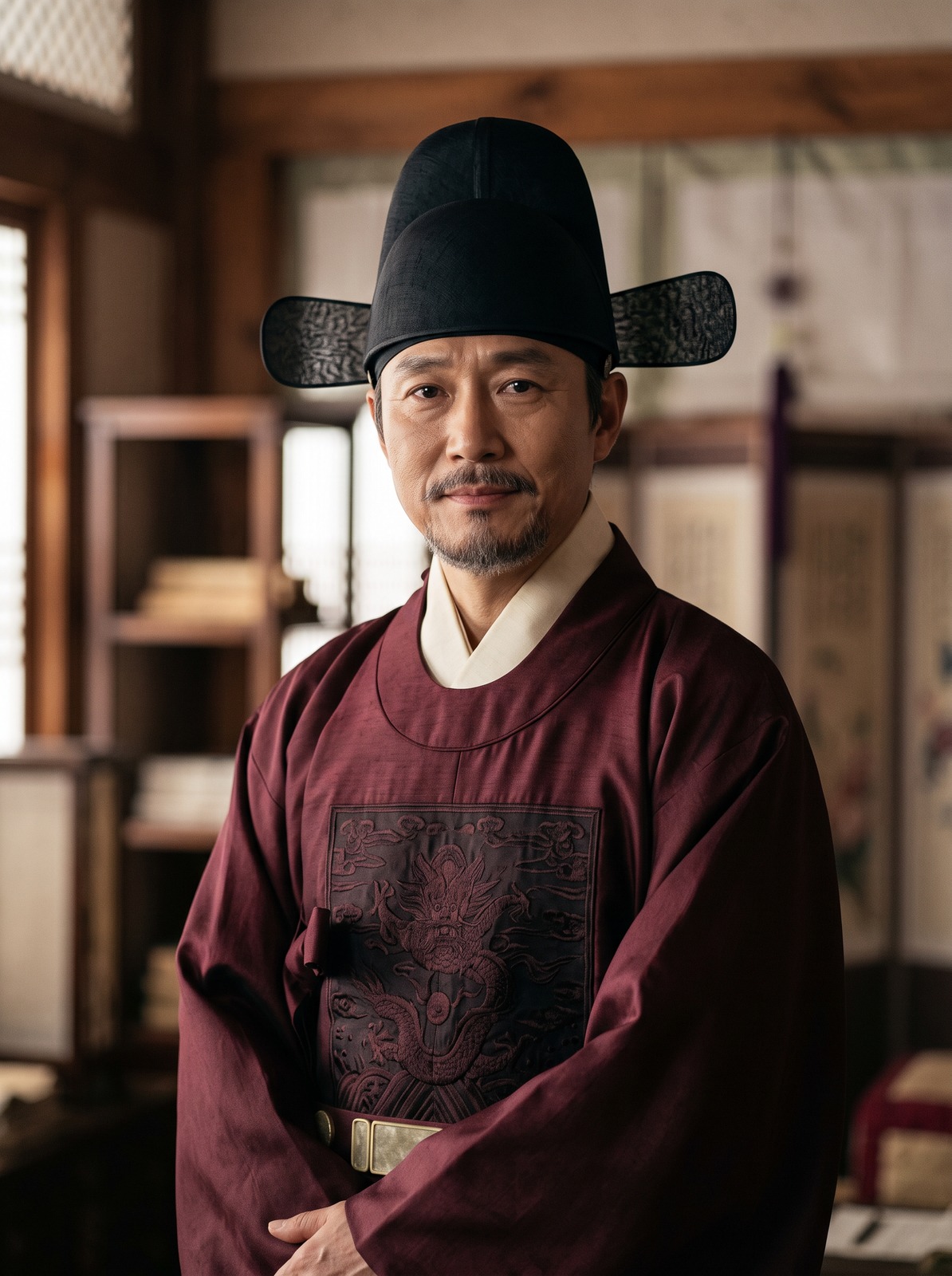
In “Father, the Daughter You Threw Away Is Queen”