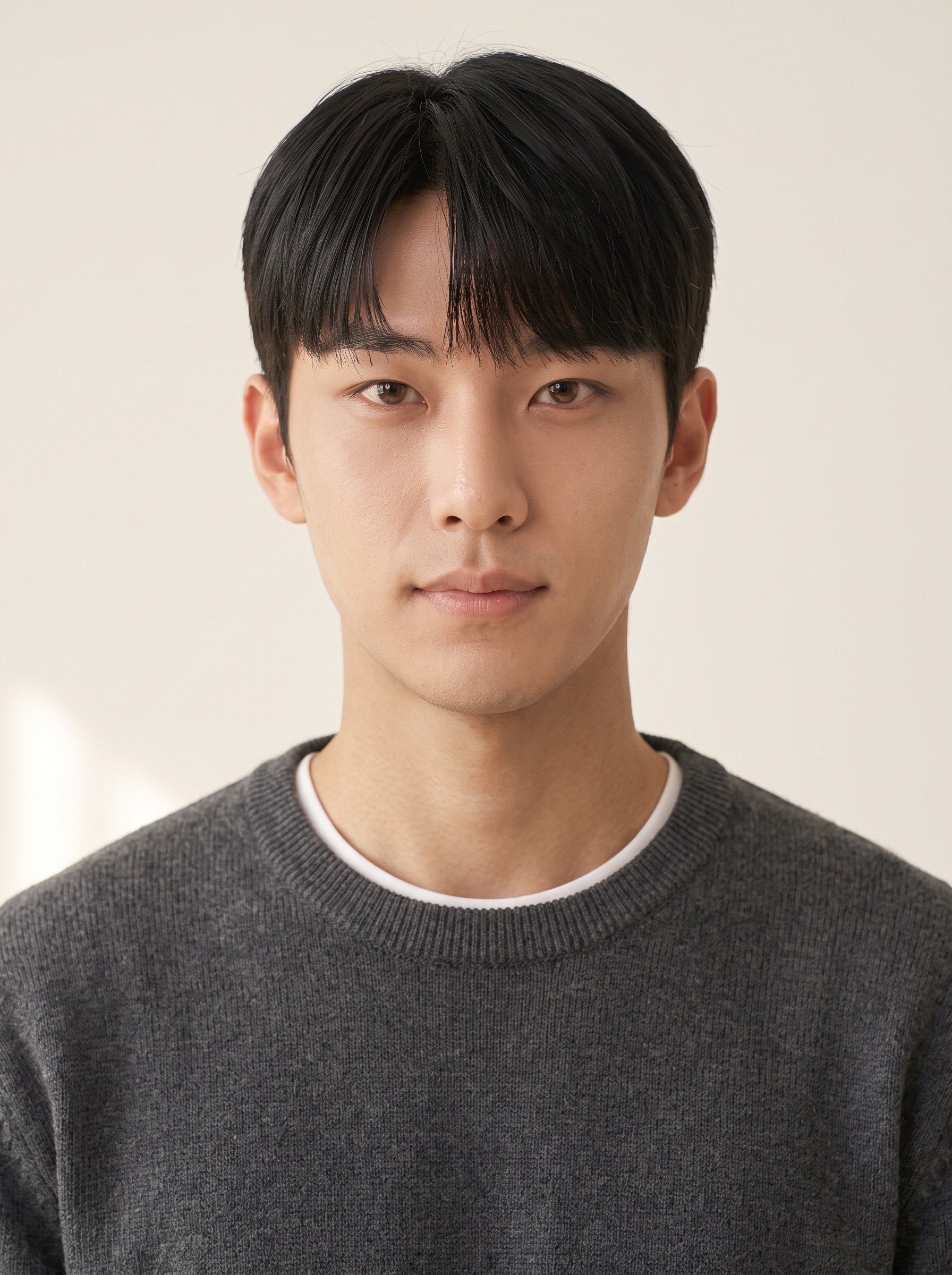
BIOGRAPHY
The story behind the actor.
Growing up
Growing up in Incheon with a sister two years older, Ha-ram was a child whose body moved before his words. His parents' hours were irregular, so at home it was natural for each person to write down their tasks and finish them on their own, and Ha-ram took that to mean a finished task needs no further talk. Even on days he fell at school and skinned his knee, he did not mention it until his sister saw and asked, and then answered briefly. He thought not creating worry was a way of helping, but for his family, who found out later, it only made the worry bigger. What he heard then has stayed with him: if you had told us earlier, there was something we could have done together. He still picks up the bags first and tidies up first, but he still thinks twice before telling people how he is.
Why acting
In his high school basketball team, what Ha-ram enjoyed most was not scoring but reading which foot an opponent had put their weight on. In a school showing in his final year, playing a part with only two lines, he first felt that even while he was not speaking, the direction he stood in and his breathing changed the pressure of the scene. Entering a university acting track in 2021, he learned that the same sense did not transfer straight to the camera. Movements that were precise on stage looked as big as an explanation on screen, and a habit showed of turning emotion into gesture instead of expression. From 2023 he also took a foundation action course, learning choreographed sequences and safety rules, and found that the bigger the movement in a scene, the more prior agreement frees the acting.
Turning points
In a scene practicum during his final semester in 2025, Ha-ram said nothing for two days about pain in his right wrist. The choreographed stretch was already set, and he did not want the schedule redone because of him. On the third day his strength gave out and he let go of the arm he was meant to hold; his partner, changing direction in a hurry, struck a knee on the floor. Heavier than having caused an injury was the fact that his partner never even had the chance to choose that risk in advance. The belief he had held — that enduring is a form of consideration — collapsed on the spot. Since then he rates his pain and fatigue as a number and states it before rehearsal begins, though the anxious sense that saying so will get him left out is still there.
PERSONALITY & CRAFT
Character and craft.
Up close
His greetings are short and he picks up the heavy things first. He says little and can seem gruff, but when asked a question he answers precisely, without padding.
At home he repeats the same bars on guitar for a long time, pulling out only the passages he cannot get right. He writes messages before calling, and cuts a sentence down twice before sending a reply. On tired days his answers get even shorter, and he worries they will be taken for anger.
Preparing a scene
On a first read he first sketches where the character stands and how far they are from the other person. Next he marks the stretches without lines, and writes in one line what he is waiting for during them. For scenes with movement he sets the order of the choreography and the stop signal first, and comes prepared with alternative moves for days when something hurts. In screen rehearsal he checks that he has not turned feeling into gesture, and whether the same information comes across without moving.
He arrives early to walk the blocking and check the floor. Before running choreography he states his condition that day as a number, and if his partner wants to change the pace he matches them first without asking why. He does not talk much between takes, but if his partner asks he says clearly what he intends to do.
The texture of the acting
- With his eyes lowered, he changes only the height of his shoulders and the length of his breath to give the same line a different pressure.
- He adjusts the distance to the other person in half-steps to show who has the upper hand without a word.
- In angry scenes he does not raise his voice but closes the consonants at the ends of words crisply, keeping the tension.
A day off stage
Late in the morning he brews barley tea and skips rope for just ten minutes. In the afternoon he repeats shots on an indoor court at a quiet hour and stops as soon as his wrist feels heavy. Back home he takes out his guitar and plays slowly the two bars he could not get, and if they come, he plays no more that day. In the evening, on a short call with his sister, he keeps his promise to name one thing that was hard this week.