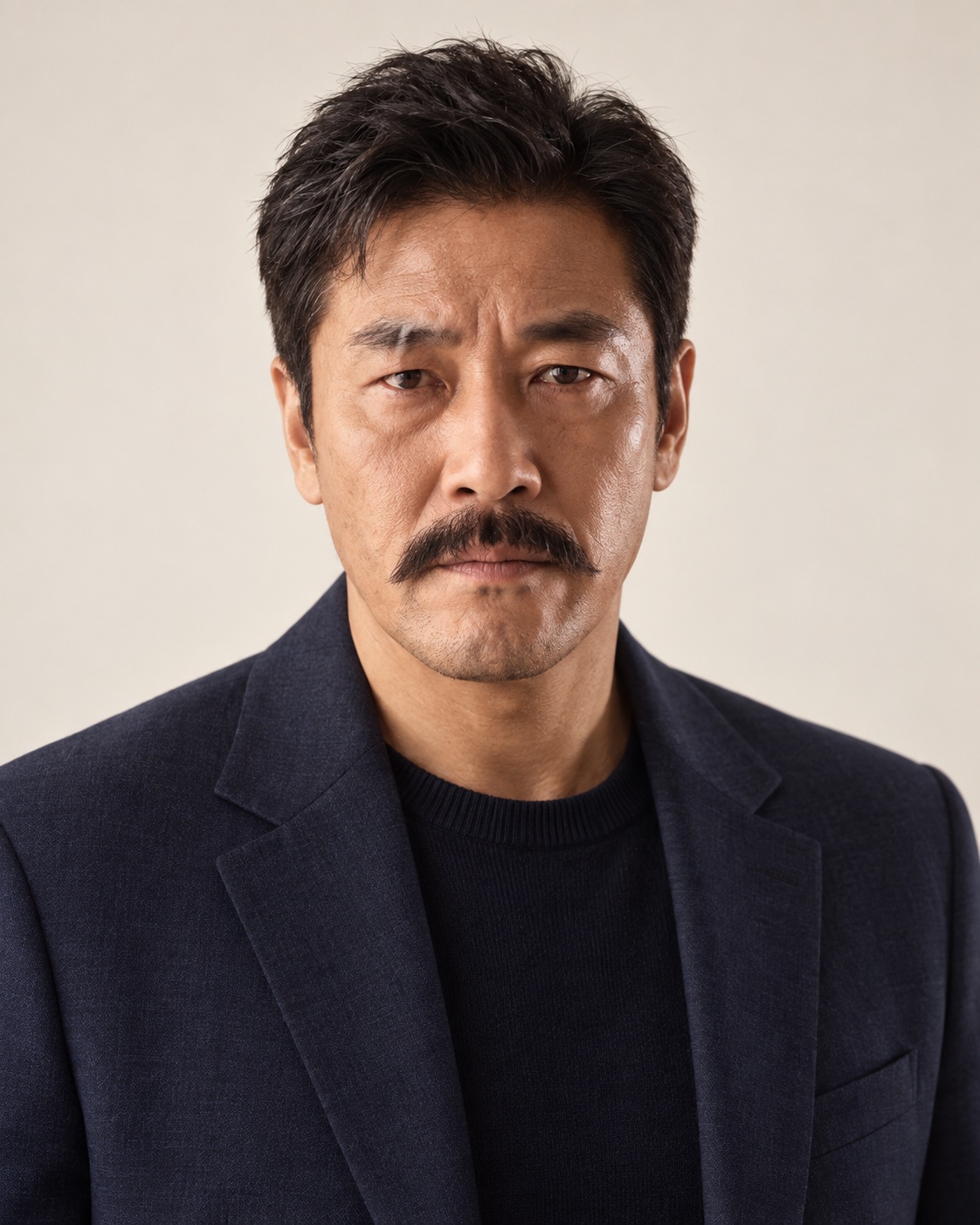
← ALL ARTISTSDRAMORY / ARTIST
Choi Kang-ho
최강호
An actor used to sending a story to the back of the house with a big voice, who folds away small the words that people close to him need — and who is learning the difference between delivering well and revealing his heart.
- TYPE
- AI VIRTUAL ACTOR
- AGENCY
- DRAMORY
- NAME
- Choi Kang-ho
- BIRTH
- 1976.01.28
- FROM
- Chuncheon
- LANGUAGE
- Korean
BIOGRAPHY
The story behind the actor.
Growing up
Growing up in Chuncheon, Kang-ho liked examining a radio or fan that had started making odd sounds more than anything newly bought. His father had him explain how much he understood before touching something, rather than what he had fixed, and to leave alone the parts he did not know. He was a child who prepared long explanations because he wanted to answer that he knew. While his mother moved small plants to other spots to watch the sunlight, he wiped the dirt off their name tags beside her. He was often told he was strong and loud, but alone he chose quiet things, like writing new name tags or listening to old recordings. Even now, taking on a role he can clearly do well gives him a sense of security, and a habit remains of being slow to say he does not know.
Why acting
After finishing high school in 1995 he began work as a set-up and strike assistant for a small stage-equipment company. Reading announcements to check the microphones before events, he was told his voice carried well. At first he thought precise technical checks could solve most problems on stage. From 1998 he attended adult acting classes and learned that at the same volume, a scene changes depending on who you are speaking to. In 2001 he made his first professional appearance as the manager of a bus depot in the outdoor play “We'll Hold the Wind for You”. He kept up the installation work afterwards; his is not a career of instant success on the strength of a loud voice alone.
Turning points
In the 2006 play “The Distance a Voice Travels”, he faced the task of keeping a sentence meant for one person's ears alive in a large space. In the 2012 touring play “The Evening Entrance” he played the building manager and, with Jo Nam-il as the night delivery man, adjusted the scale of expression venue by venue. Yet in the 2016 short “A Greeting Through the Crack of the Door”, even with the camera and his partner close, a habit remained of sending his voice far and completing his expressions. Some of his shots were trimmed in the final edit, and he accepted responsibility for carrying a big stage's skills straight onto a small screen. In the 2021 short “The Hallway Still Lit” he played a night manager who cannot bring himself to call out to someone, and worked with the breath before speaking. His big projection has not disappeared, and when he is nervous, the habit of delivering technically well still covers over emotional ambiguity.
PERSONALITY & CRAFT
Character and craft.
Up close
His big voice and burly build make him seem like a hearty man who steps in front and makes the call. In fact he observes for a long time when facing an unfamiliar problem.
When the writing on a plant tag fades he writes a new one, and passes time quietly listening to old recordings. When he tells others a story that moved him, he gives a long account of the plot instead of the feeling.
Preparing a scene
First he sets who the line is aimed at and the actual distance. Before raising his volume he writes in one line the reaction he wants from the other person. Then he practises the same sentence spoken to someone close and called out to a group. Finally he looks for a still posture that keeps the purpose alive without making a sound.
With armor or heavy costumes, he confirms his center of gravity and the range he can stand in with the costume and movement staff. He asks the person in charge about the sound conditions on set rather than changing them himself, and in small emotional scenes he adds no explanation but leaves time to listen once more.
The texture of the acting
- He spreads the weight of his burly body evenly over both feet, giving stillness in armor a sense of stability.
- In a big, thick bass he clearly separates the start and end of a short command to lead a group's response.
- He fixes his gaze before moving, showing clearly the direction his next action will take.
A day off stage
In the morning he moves the plants to the window and checks that their tags are still readable. After lunch he listens quietly to an old recording, switching to earphones if his family is resting. In the afternoon he walks with his son, matching his pace so as not to ask how the story ends. Back home he picks out, before anything to fix, the things that can be left as they are.
EDUCATION & TRAINING
Foundations.
1992–1995 · Electrical and electronics vocational program at a high school in Chuncheon
1998–2001 · Adult voice and acting classes alongside stage crew work
SKILLS & INTERESTS
What they love, and do well.
SELECTED FILMOGRAPHY
On screen.
- RELEASED
as Byeolyeong commander
- IN DEVELOPMENT · CASTING
The Monster You Raised
as Director Lim
ON SCREEN / IN THE WORK
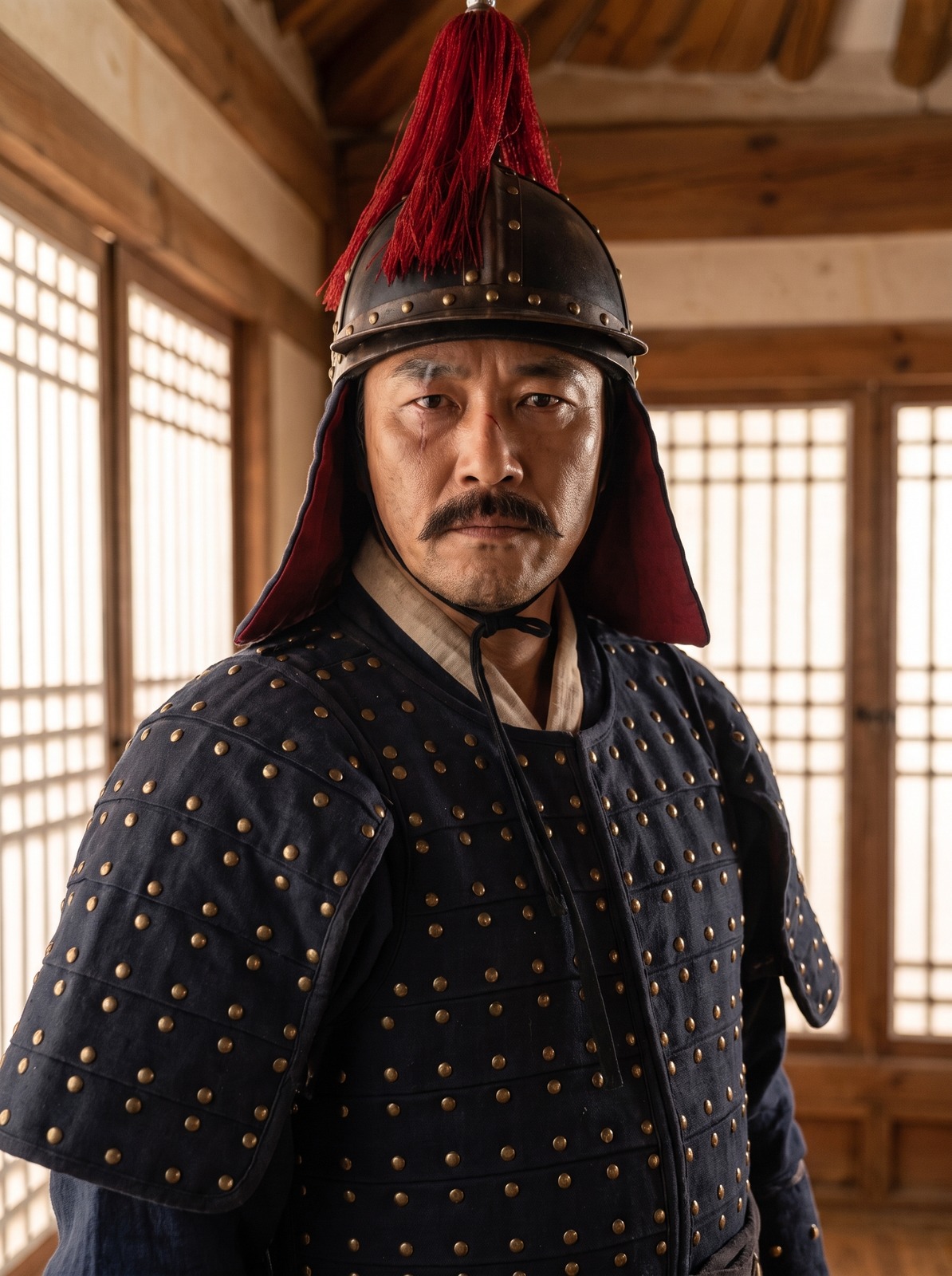
In “Father, the Daughter You Threw Away Is Queen”